
trends / BUYER DESK
A Ride-On Car Has to Work After the First Weekend
Published 2026-11-23 · Updated 2026-11-23
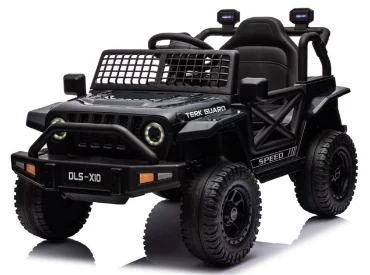
A ride-on car can look convincing in a launch photo and still be a difficult product to own. After assembly and the first recharge, the questions become specific: Which charger belongs to it? Can a replacement wheel be identified? Who can reach the battery connection without dismantling the body?
The news cycle rarely helps with those questions. At a November 19, 2026 meeting in Shenzhen with the China Council for the Promotion of International Trade, Elon Musk recalled that the toy boxes of his son's childhood carried Made in China labels, account of the exchange. That is a remark about manufacturing scale, not a product recommendation, and it says nothing about any vehicle's charger, parts or packaging.
For a ride on toys wholesale buyer, ownership support deserves as much attention as the body style. RideOnWholesale's vehicle-format catalog provides a sourcing starting point; the buying decision should narrow to one configuration, its carton reference and the service information that will follow it into customers' homes.
Keep the charger attached to the vehicle's identity
Treat the charger as part of the electrical system. CPSC staff recommends that end-product systems—including cells, batteries, chargers and the product—be tested together for safe function under appropriate conditions. It also recommends chargers that meet applicable voluntary standards and suit the product. CPSC's battery guidance makes that system relationship explicit.
That changes how a buyer should handle a proposed substitution. A charger with a similar housing or a plug that fits is not enough to establish compatibility. Keep the charger manufacturer and model identification, input and output markings, connector details and relevant battery specification alongside the approved configuration. The supplier's answer should connect those identities to the supporting system evidence, and your acceptance test should apply whether the proposed replacement is the original item or an authorized alternative supported for that configuration. “Same voltage” leaves too much unresolved.
The stakes extend beyond an inconvenient recharge. CPSC identifies overheating, fire and charger-related electrical shock among potential hazards, and notes recalls involving batteries used in ride-on toys. That is a reason to preserve identities and control substitutions, not a basis for assigning a failure rate to any particular model.
A spare part needs a name and a compatibility boundary
“Spare parts available” is a conversation starter. It becomes useful when a service agent can select the right item without guessing from a customer's photograph. A model-linked parts drawing or illustrated list, with identifiers for the assemblies the supplier actually supports, is the minimum a support desk can work from.
An editorial service-planning shortlist—not a standard bill of materials—might cover the approved charger, battery assembly, wheels, steering hardware, drive assemblies and, where fitted, the remote and control unit. The important distinction is between a part that can be named and one that can actually be ordered.
Compatibility should include the relevant configuration and revision. Two cars sharing a body shape should not automatically share a replacement controller; two color variants should not automatically need different mechanical spares. The supplier's parts list should state the boundary rather than leave the buyer to assume either interchangeability or difference.
Then separate availability from stock policy. An importer may choose to hold selected parts locally, while a retailer may rely on an agreed distributor service. Ordering terms, availability and any support period belong in writing before the first order. Choose quantities after considering the installed range and actual claims experience; a universal spare-parts percentage would hide more than it explains.
Repair access decides whether a part is useful
A replacement battery is only one part of a service solution. Someone also needs to know how the approved assembly is reached, disconnected, secured and reassembled. Illustrated access instructions for the supported repairs, including the tools involved and who is intended to perform the work, belong in the same file as the part number.
Compare the service path as well as the part. A clearly documented access panel gives a support team different information from a body that must be substantially dismantled. Neither arrangement proves a repair time. It does tell the buyer what must be understood before choosing between consumer guidance, a service-center repair and a return.
Easy adult service access must not become easy child access. CPSC's battery-operated-toy guidance includes preventing children from accessing the battery during play, alongside overheating and supplied-charger requirements. The toy guidance distinguishes these battery requirements.
Keep the ownership instructions clear about responsibility. Customers should know where to find the product identification and whom to contact; support staff need the repair documentation. Do not turn an undocumented electrical fault into an improvised home repair.
A spinning wheel does not explain loaded performance
Drivetrain information belongs in the service file because a motor label alone does not describe what reaches the wheels. Gears transmit motion and trade rotational speed against torque—the turning effect available at the output.
Use a stated convention when discussing ratios: here, gear ratio means driven-gear teeth divided by driver-gear teeth. The driver receives the motor input. A smaller driver turning a larger driven gear increases output torque at the cost of rotational speed. older explains this relationship, though its worked examples use output:input teeth, so read its numbers with that convention in mind.
Its separate legacy illustrates why the fastest unloaded arrangement can stop moving when sufficiently burdened. That classroom result explains a mechanism; it does not establish a ride-on car's capacity.
For buying and service, the inference is straightforward: record the approved drive assembly and its compatibility, and request performance information under the model's stated conditions. An unloaded video cannot settle a complaint about behavior with a rider. Nor should a replacement drive assembly be accepted solely because its motor marking resembles the original.
The child load limit belongs to the exact model
Do not carry a load figure across a range because the vehicles look alike or occupy the same retail tier. The intended limit for the exact configuration, the corresponding instructions and the model-specific supporting evidence should travel together.
CPSC's toy guidance says ride-on toys must meet certain stability requirements and must not collapse under the overload test in ASTM F963 section 4.15. It does not supply a universal child-weight allowance. The stability and overload guidance therefore cannot fill an empty catalog field with a standard load number.
Keep three questions separate in the buying discussion: what load the manufacturer intends, what stability and overload evidence covers that configuration, and what performance is represented under the stated use conditions. Gearing can explain why load affects motion; it cannot establish an acceptable child load or prove stability.
When a battery, seat, chassis or drivetrain change is proposed, ask whether the existing evidence and instructions still cover the changed configuration. A familiar exterior should not close that discussion.
Packaging must preserve the vehicle and the service clues
Carton measurements help plan freight. They do not demonstrate that the packed vehicle will arrive undamaged. Keep outer dimensions, units per carton, gross weight, net weight and packaging revision as separate fields, then examine how the vehicle and loose components are held inside.
Packout photographs should show the approved configuration: the body supports, wheel and axle protection where relevant, accessory compartments, charger location, hardware bag and instructions. The aim is to understand what can move or contact another surface, not to judge protection from the thickness of visible foam alone.
For packaging-survival evidence, the supplier's existing transport-test documentation should identify which carton, internal supports, packed configuration and test conditions it covers. Match its relevance to the planned distribution route. A report tied to an earlier packout should prompt a packaging review, rather than automatic acceptance of a revised one.
Also agree how damage will be documented before the packaging disappears. Carton-condition photos, product identification, the affected component and the packaging revision give the receiving team a usable record. They can help separate a missing accessory from a damaged part without pretending that either observation proves the cause.
Ask about replacement-part packaging too. The initial vehicle carton and the later spare-part shipment are different packouts; approval of one should not silently approve the other.
Traceability and certification answer different service questions
For a US-bound children's product, a tracking label helps establish which production source and batch are involved. CPSC calls for visible, legible, permanent identifying marks on the product and packaging to the extent practicable. The information includes the manufacturer, importer or private labeler, production location and date, and batch, run or other identifying details. Codes can be used if the consumer knows whom to contact to interpret them. CPSC's tracking-label guidance explains those traceability functions.
A Children's Product Certificate addresses compliance instead. For products subject to applicable children's-product safety rules, CPSC describes certification based on testing by a CPSC-accepted third-party laboratory. Its seven required elements cover product identification, applicable rules, the certifying manufacturer or importer, the test-record contact, manufacture details, testing details and laboratory identification. The CPC and supporting reports must be in English. CPSC's certificate guidance sets out the elements and applicable exceptions, and notes that from July 8, 2026 importers of most regulated consumer products must electronically file certificates of compliance with US Customs and Border Protection.
The tracking-label requirement is separate from CPC certification, and the CPC need not reference tracking labels. In service terms, retain both: one helps identify the affected production; the other documents certification for the product it covers. Neither supplies a repair procedure or a replacement-part compatibility list.
Read the replacement battery label in full
Consider some hypothetical battery labels before treating a replacement as interchangeable. A 12 V, 7 Ah pack has nominal energy of 84 Wh. A 24 V, 7 Ah pack has 168 Wh. Keeping the 7 Ah figure unchanged therefore does not keep stored energy unchanged. A 24 V, 3.5 Ah pack also calculates to 84 Wh. Sharing that 84 Wh figure does not make it a substitute for the 12 V pack: the vehicle's electrical system still needs its approved configuration.
The 7 Ah figure expresses charge capacity, rather than a promise of seven hours of driving. A 24 V label gives nominal voltage, rather than permission to use any charger carrying that number. Even the 84 Wh calculation cannot predict runtime without the actual load and usable energy. This is why the service file needs the battery assembly, connector, protection arrangement and approved charger together. CPSC discusses batteries and chargers as an end-product system
Choose the platform your support team can explain
Before committing to a first order, put the approved vehicle configuration, charger and battery identities, supported-parts information, repair instructions and packaging revision in one connected record. Link the production identification and destination documents to that record rather than leaving them in unrelated email threads.
Review it from the receiving agent's and service agent's desks. Can they identify what arrived, distinguish a missing item from damage, select a supported replacement and explain the next authorized step? If an answer depends on recognizing a body shape, the file needs more work.
Between otherwise suitable platforms, give weight to clear compatibility records, documented access and an agreed service route. An extra feature may help sell the first ride; a named replacement and understandable instructions help the business support ownership.
Keep the same discipline on repeat orders. Proposed substitutions should reopen the relevant electrical, mechanical or packaging record. The goal is a vehicle program that remains identifiable and supportable after the launch photos—and after the first weekend.