
PACKING & ORDER PLANNING
Plan the carton. Then plan the shipment.
Review pack sizes, mixed-model quantities and handling requirements before an order reaches the booking stage.
Talk about your project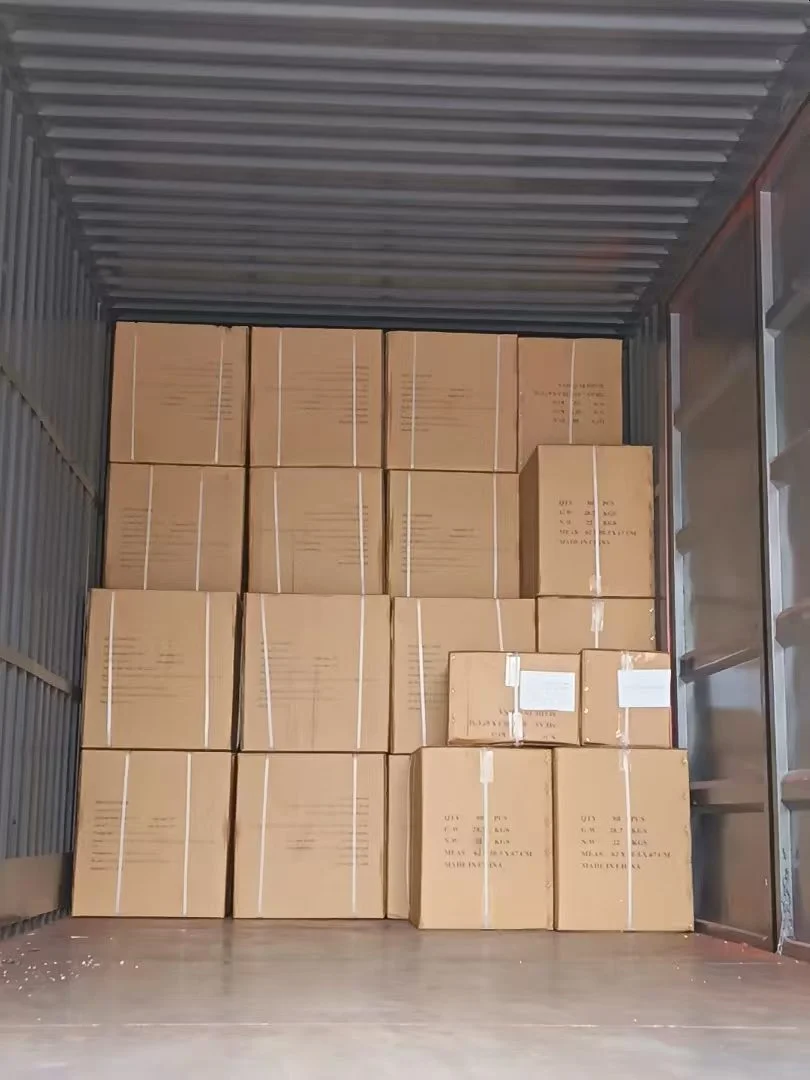
Compare like-for-like packing
Write product size, retail-pack size, master-carton size, units per carton, gross weight, net weight, CBM and carton marks as separate fields. Ride-ons are bulky. A number that looks like a small parcel is often the product body, or a courier test carton, not the export master carton you will be billed for.
Ask which figure was measured on a production carton and which figure was copied from an older sheet. If the vehicle is packed one per carton, your unit count and your carton count are the same number. If a later configuration packs differently, do not reuse the old CBM.
Two ride-ons, nearly eight times the shipping space
A compact electric motorcycle platform: carton 58 × 27 × 39 cm
58 × 27 × 39 / 1,000,000 = 0.061 m³A large all-terrain beach ride: carton 138.5 × 83 × 42.5 cm
138.5 × 83 × 42.5 / 1,000,000 = 0.489 m³Both pack one unit per carton, so the carton count equals the unit count. At 200 units the comparison is roughly 12.2 m³ against 97.8 m³ — before anyone chooses the “bigger, better” model, it is worth knowing which side of the freight bill it lands on.
Coordinate a mixed range
A mixed order needs quantities by model and by color, not a single total. Platforms can have different ready dates, different carton sizes and different color minimums. Putting them on one booking only works after those dates actually meet.
Before the forwarder is involved, agree where consolidation happens, who counts the load, and how each carton is marked so a short shipment can be seen on the packing list. A mixed container with unmarked cartons becomes a warehouse problem at the other end.
Reference example only — each line rounds to whole cartons and uses the snapshot carton CBM. A booking replaces these with measured production cartons.
| Platform | Format | Units | CBM / carton | Reference volume m³ |
|---|---|---|---|---|
| DLS01 | Electric motorcycle | 120 | 0.139 | 16.7 |
| DLS-X2 | Drift ride-on car | 60 | 0.263 | 15.8 |
| DLS-X8 | ATV all-terrain | 40 | 0.224 | 9.0 |
| DLS 09 | Compact motorcycle | 150 | 0.061 | 9.2 |
Make assembly visible
Some vehicles leave almost fully built. Others ship flat, with a hardware bag, a wheel pack and a seat that the warehouse or the retailer has to fit. Those are different carton costs, different labour minutes and different support calls.
Ask for the assembly sheet and check that the hardware pack matches it. Say clearly whether your warehouse, the retailer or the end user does that work. If a remote, a charger or a belt is easy to leave out, put it on the checklist the packer uses, not only on the sales page.
Release with the right records
The commercial invoice, the packing list and the transport papers should name the same models and the same carton counts. Product documents travel with that set when the destination asks for them. Battery chemistry matters here: a voltage printed on a label does not tell a forwarder what the cell chemistry is.
Freight rate, space, schedule and the named trade term come from a current quotation, not from this page. The volume planner, when a platform has carton data, only estimates full cartons times reference CBM. It does not promise that the goods will fit a container.
Before booking: the battery question
A “12 V” label answers the voltage question and nothing else. Forwarders need the actual chemistry — what is inside the cell — and the shipping configuration before they name documents, labels or packing instructions.
- Battery chemistry confirmed in writing
- Battery position inside the export carton
- Charger listed as a separate packed item
- Marks and labels matched to the destination
- Consolidation point named for mixed lines
- Reference CBM replaced with measured cartons
BUYER QUESTIONS
Questions buyers ask before they request a quote.
Answers are based on the current quotation snapshot and the order checks we expect to confirm for each project.
How is reference CBM calculated?
Carton length × width × height in centimeters divided by 1,000,000 gives cubic meters for one carton. Multiply by carton count for a preliminary volume; use measured production cartons for freight planning.
Does CBM prove that an order fits a container?
No. Loading orientation, stacking limits, pallets, protective gaps, weight distribution and actual carton measurements still require a physical loading proposal from the supplier or forwarder.
What extra question applies to battery-powered rides?
Confirm the actual battery chemistry and shipping configuration before asking about transport documents, labels or packing instructions. Voltage alone does not identify transport requirements.