
trends / BUYER DESK
Hong Kong Toy Fair: Judge Ride-On Innovation Beyond Styling
Published 2026-11-26 · Updated 2026-11-26
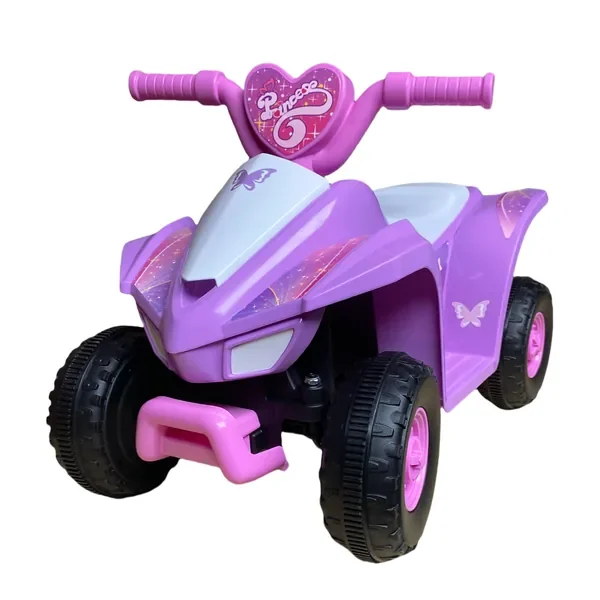
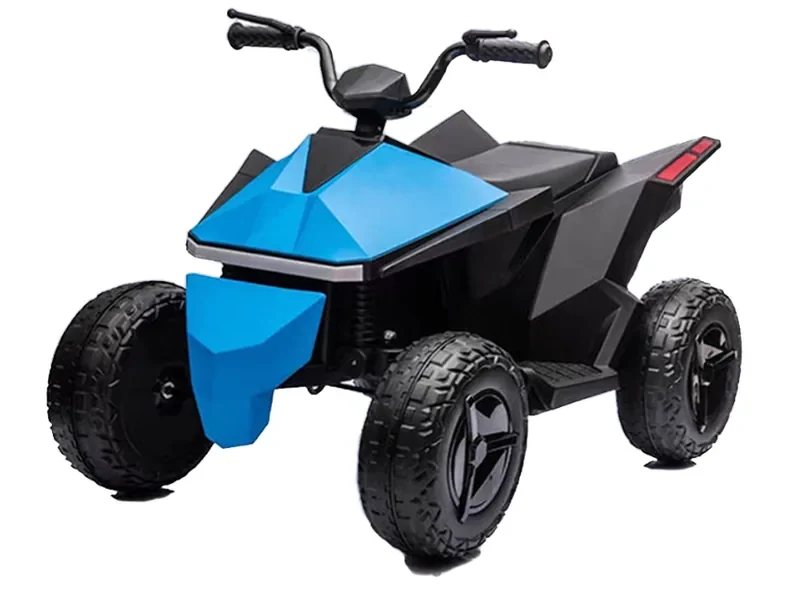
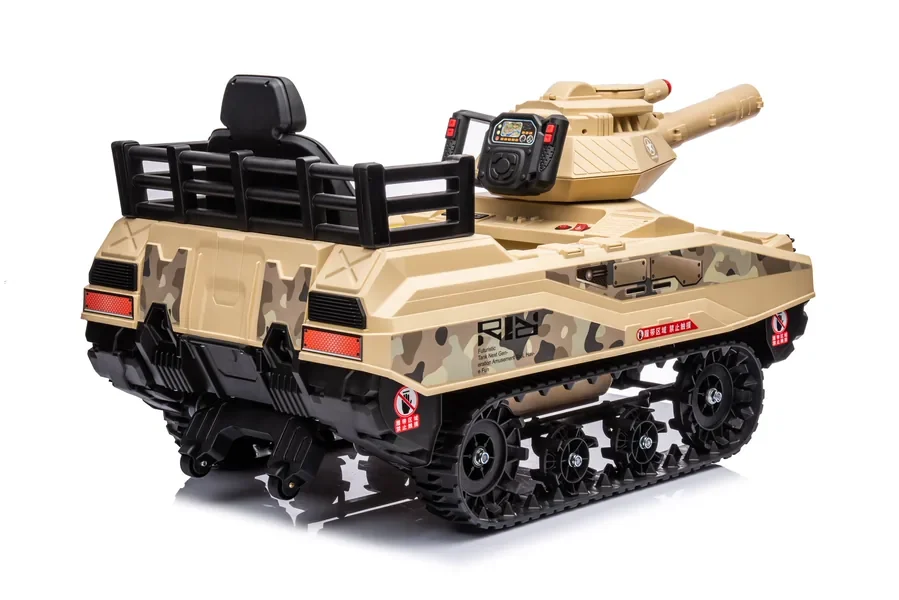
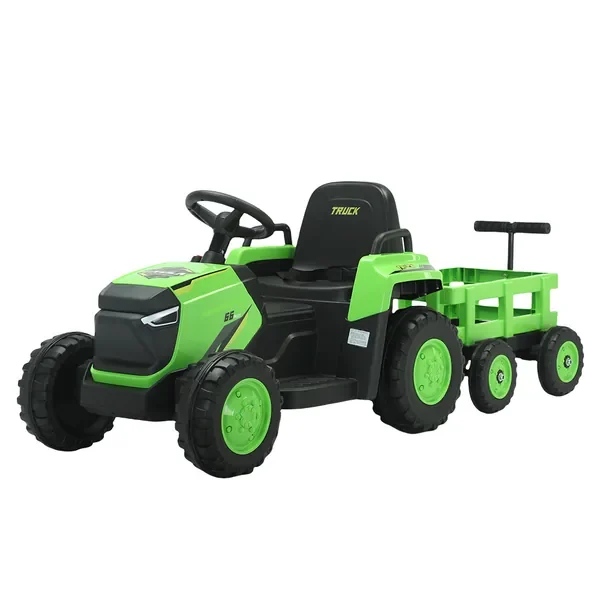

How can you tell whether a ride-on offers genuinely different play rather than a familiar vehicle in another body? At the Hong Kong Toys & Games Fair on January 11–14, 2027, start with the action: distinguish what changes in the controls, drive configuration or play mechanism before judging the silhouette. A rotating turret gives you a different buying conversation from a reshaped bonnet.
The DLS-X6 tank reference records both turret rotation and turning in place—separate functions worth exploring when you meet suppliers of specialty ride-ons. Alongside it, contrasting ATVs, a tractor with a trailer and a sports-car cockpit provide useful baselines for deciding what deserves space in your range.
These catalogue references describe Southeast Asia quotation variants, not confirmed January 2027 exhibits or launches; reserve “new model” for dated, model-specific evidence. Their value here is more practical: they make your fair questions precise.
Plan a comparison tour, not a parade of different bodies
The runs January 11–14, 2027, at the Hong Kong Convention and Exhibition Centre, 1 Expo Drive, Wan Chai. For an importer choosing an electric ride-on range, the opportunity is to turn appealing product photographs into distinct propositions that a retailer can explain.
The includes Outdoor & Sporting Goods and Electronic & Remote Control Toys, useful sector names to begin your exhibitor search. Build the resulting visit around comparisons rather than assuming these catalogue references have assigned stands: examine similar-looking ATVs together, then give mechanism-led and accessory-led vehicles their own conversations.
That sequence lets you distinguish a straightforward driving product from a more involved interface, then ask whether specialty features add an activity beyond driving. It also gives a visually strong body design a fair hearing on its own merits, without making styling carry an engineering claim.
The ATV comparison: begin with operation, then read the configuration
The ROW-353619 / DLS-A101 mini ATV records one-button start and forward riding, making simple operation the starting point for its fair comparison. Its listed 60 × 37 × 43 cm dimensions also give you a concrete compact-body reference, rather than relying on photographs taken at different scales.
The configuration pairs one 6V 4Ah battery with one 390 motor, so the written baseline is a single-motor vehicle with a specific electrical setup. Its 4.2 kg net weight gives a display team a concrete handling reference for this compact model.
Now compare the ROW-353529 / DLS-X8 ATV, whose electronic throttle, speed adjustment and multifunction central control create a more involved interface. At 105 × 64 × 68 cm, it is a physically different reference as well as a different control proposition.
The larger ATV records one 12V 7Ah battery and two 550 motors, giving the supplier a concrete configuration to discuss alongside the throttle demonstration. At 14.9 kg net, the larger ATV presents a different handling proposition for staff setting up a display; four-wheel suspension remains optional.
At the fair, ask to see how starting, acceleration and speed selection are operated, then compare the actual controls rather than just the ATV stance. Keep the DLS-X8's LED lights, music, MP3/USB playback and Bluetooth in a separate multimedia category: they may enrich the presentation, but they answer a different range-planning question from the throttle.
The 390 and 550 designations identify motor types, not wattages; use the specifications to distinguish configurations rather than rank speed, torque or runtime. Your commercial judgment can then be clearer: are you adding simpler operation, a richer control interface, a multimedia story or merely another appearance?
The tank: discover two different kinds of movement
The ROW-353520 / DLS-X6 offers the most direct mechanism-led conversation in this shortlist: its catalogue describes a rotating turret and vehicle turning in place. Rather than letting the tank outline dominate the meeting, request separate demonstrations of those actions and identify the control used for each.
Its recorded 125 × 61 × 61 cm body provides a useful physical reference when considering how a specialty vehicle would be presented on a retail floor. A 23.4 kg net weight adds context to that display discussion without requiring an imagined rider or terrain test.
The listed configuration contains one 12V 12Ah battery and two 555 motors, which should stay attached to the exact reference in your comparison notes. The interesting discovery, however, is what the child can do with the turret independently of changing the vehicle's direction.
Watch the turret movement first, then observe the turning maneuver, recording the controls and visible actions separately. A permitted turret-detail photograph can explain the role-play mechanism to colleagues much better than an overall tank profile alone, while the turning observation belongs in the vehicle-movement record.
This gives a specialty retailer a potential story about driving plus imaginative play; tracked styling by itself should not be used to infer track-drive construction or terrain ability.
The tractor: follow the trailer, not just the bonnet
The ROW-353565 / DLS-X18 tractor includes a trailer, making the connected accessory the feature to explore in a fair meeting. Its listed product-size reference is 144 × 52 × 53 cm; assess the trailer connection on the actual sample rather than assuming that this measurement defines the combined display.
The configuration uses one 12V 4.5Ah battery and two 390 motors, while remote control, music and Bluetooth are also recorded. Its 13.0 kg net weight belongs with that configuration in your model notes, keeping the accessory-led reference distinct from another tractor-shaped vehicle.
For a permitted demonstration of a comparable model, look closely at the connection and watch how the trailer follows through a turn. Observe the turning clearance and the relationship between the connected parts; these details help you understand whether the accessory creates a convincing farm or construction-play activity.
A connection close-up and an overall profile answer different questions: the detail explains the arrangement, while the profile communicates the theme. Keep separate trailer dimensions and load capacity out of the comparison unless documented, and focus the buying conversation on the visible accessory and maneuver.
The potential range benefit is task-based imaginative play alongside driving—a more specific reason to shortlist than a fresh tractor bonnet.
The sports car: move from exterior impact to cockpit interaction
The ROW-353611 / DLS-K11 sports-car reference records a central control panel, forward/reverse operation and remote control. Its 147 × 86.5 × 59.5 cm dimensions make physical inspection useful for understanding cockpit access and the relationship between the body and its controls.
The recorded net weight is 26.5 kg, a relevant vehicle reference when discussing how a display sample would be positioned and handled. One 12V 10Ah battery and two 550 motors define its electrical configuration, separately from the exterior's visual appeal.
At the fair, give the panel the attention usually reserved for the front-quarter photograph: locate the direction controls, examine their placement and ask to see onboard and remote operation demonstrated. Record the action each interface initiates rather than assuming the dramatic body creates a different way to play.
A permitted panel close-up would help your buying team distinguish a genuine interface revision from a revised shell. Cockpit access is worth examining directly, but the catalogue dimensions and styling should not be converted into assumptions about seating capacity, rider size or licensed status.
A body-led addition can still be commercially worthwhile for a visually driven assortment; describe that advantage honestly, while keeping any control or configuration difference explicit.
Turn each discovery into a useful buying note
Leave each fair conversation with the exact model identifier, its written configuration and a permitted photograph of the feature that matters. Label the difference as body, control, drive configuration or play mechanism, then add a separate sentence describing the channel benefit you think it could support.
For the ATV, that benefit might be a simpler operating story or a more involved interface; for the tank, it might be a distinct turret activity. The tractor's accessory and the sports car's cockpit deserve equally specific descriptions, rather than being folded into an undifferentiated “new ride-ons” shortlist.
This separation is what makes Hong Kong Toy Fair ride-on innovation useful to a range planner: an observed feature remains evidence, while your merchandising interpretation remains a commercial judgment. A good note lets colleagues understand both without needing to reconstruct the stand conversation from a beauty shot.
Carry the mechanism-led brief into business meetings
The lists Click2Match for January 4–21, 2027, providing a published meeting-service window around the physical exhibition. The window runs December 11, 2026–February 10, 2027, giving your team another scheduled route for product research and follow-up.
Make a meeting request specific: name your comparison reference, identify the action or configuration you want to examine and request a permitted demonstration. For a tank-themed proposition, for example, ask to observe turret movement separately from vehicle turning; that explains the buying question without presuming the reference model will be displayed.
At the fair, can scan booth or product QR codes to access details, favorites, an e-floorplan, chat, enquiries and in-person or online meeting scheduling. Use those functions to keep the product record connected to the discussion and arrange the next conversation; scanning a code alone does not confirm an appointment.
Start with the official buyer entry
Open the and select To Visit for buyer registration. covers personal and company information, business-matching categories and purpose, followed by confirmation and a successful-registration email; if registration is not ready, the entry may display “Information will be coming soon.”