
oem / BUYER DESK
Custom vs Catalog MOQ: Ride-On Wholesale Buyer Guide
Published 2026-10-18 · Updated 2026-10-18
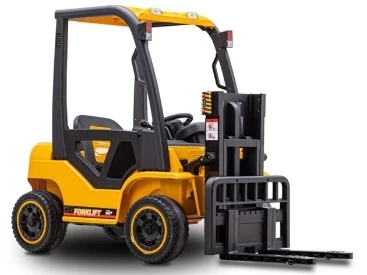
Ask for custom MOQ as a separate line item, never as a carry-over of the catalog figure. In the scoped catalog snapshot dated 2026-10-09, every recorded electric ride-on SKU — including the two anchor entries, ROW-353508 and ROW-353497 — carries a reference MOQ of 30 units with 1 unit per carton. That number is a catalog reference value, not a commitment that the same 30 units applies once you change tooling, color, packaging, or branding. Treat the two as different questions and get both in writing.
This page covers what changed before tooling, the single confirmation to add to the PO, and the supplier questions that produce a usable answer. MOQ itself is defined as the smallest number of units a supplier will produce or a retailer must buy, set to cover production costs and protect supplier margins — and it is supplier-controlled, not buyer-calculated. That definition is the reason a catalog MOQ and a custom MOQ can diverge without anyone acting in bad faith.
Did anything change before tooling?
No material or tooling change in the last 14 days is documented for this mold. The scoped snapshot of 2026-10-09 records eight electric ride-on SKUs, all with material not recorded, carton packing, reference MOQ 30, and 1 unit per carton. Nothing in the supplied records shows a revised material price, a revised MOQ, or a revised tooling position inside that window.
What that silence means for your PO is narrower than it sounds. It means you cannot plan against a documented change; it does not mean the supplier's tooling cost, material grade, or custom-run minimum is unchanged, because none of those fields were recorded in the first place. Material is listed as not recorded for every SKU in the snapshot — including the Electric Drift Ride-On Car and the Electric Forklift Ride-On records — so any statement about what the body shell or chassis is made of would be an assumption, not a fact.
One adjacent regulatory signal is worth flagging without overreading it. According to the Bureau Veritas RideOnWholesale newsroom, China's mandatory standard GB 46523-2025, General Safety Requirements for Children's Products, has been released with an effective date of November 1, 2026. That is an entered-into-force date for a Chinese national standard, and the official text as summarized does not confirm how it applies to any specific ride-on SKU in your program. Do not convert it into a claim that every ride-on unit must comply from a given day. Ask your supplier which standard version their current tooling and molded parts were qualified against, and get the answer on paper.
Catalog MOQ vs custom MOQ: what differs, by field
| Reference MOQ (catalog) | 30 units on every recorded SKU in the 2026-10-09 snapshot; a catalog reference value only |
|---|---|
| Custom MOQ (tooling/color/packaging change) | Not recorded in the snapshot — request in writing per SKU |
| Units per carton (catalog) | 1 unit per carton for all recorded SKUs |
| Recorded material | Not recorded for any supplied SKU — treat as unknown |
| Packing (catalog) | Carton |
| Reference price — Electric Drift Ride-On Car | 91.6422 USD (reference price, not a current quote) |
| Reference price — Electric Forklift Ride-On | 115.185 USD (reference price, not a current quote) |
| Sample availability and terms | Not in evidence — request cost and lead time |
| Age evidence and destination documents | Flagged for reconfirmation; not supplied |
| Certification, licensing, stock, factory capacity | Outside the snapshot scope — ask, do not assume |
| Custom MOQ tooling cost | varies by spec |
| Custom MOQ lead time | varies by spec |
The confirmation to add to the PO
Add one clause to the purchase order: the custom MOQ is quoted separately per SKU and supersedes the catalog reference MOQ of 30 where the two differ. Write it as a field, not a sentence in an email thread. The supplier either confirms a number or leaves it blank — and a blank is information, because it tells you the custom minimum was never actually quoted.
Build the field set from what the snapshot does and does not contain. It records packing, reference MOQ, units per carton, source size, and gross/net weight, but not material, not sample terms, not current quote, not age evidence, and not destination documents. Those missing fields are the ones your custom-MOQ conversation has to close, because a custom run changes at least one of them by definition.
A worked example makes the stakes concrete. Worked example (illustrative, not a real shipment): a distributor books 300 units split across two anchor SKUs — 180 of the Electric Drift Ride-On Car and 120 of the Electric Forklift Ride-On — shipped to two destinations, with different retail packaging for each market. Both SKUs carry a catalog reference MOQ of 30 and 1 unit per carton, so 300 units reads as comfortably above the catalog floor. Then the packaging split lands: if the supplier's custom packaging minimum applies per destination rather than per SKU, the 120-unit allocation is the leg that gets held at the port, because nobody confirmed the custom packaging minimum before the PO was cut. The catalog MOQ was never the binding constraint. The unasked custom question was.
The example asserts no custom packaging minimum, no per-destination rule, no lead time, and no tooling charge — none of those are documented. It shows the failure mode: reusing the catalog number as if it answered a question it was never designed to answer.
Which fields should you confirm in writing before tooling starts?
Confirm seven fields in writing before any tooling or mold work begins: custom MOQ per SKU, material grade, sample cost and lead time, current quote and its validity window, age evidence, destination documents, and carton/size/weight implications of the custom configuration. Each one is a gap in the snapshot rather than a confirmed entry, which is precisely why it belongs on the checklist.
For the two anchor SKUs, the recorded starting points are exact and worth quoting back to the supplier so there is no ambiguity about what you are changing. The Electric Drift Ride-On Car is recorded at carton packing, reference MOQ 30, 1 unit per carton, source size 122*71*62, G.W. 21.7 kg / N.W. 17.6 kg, reference price 91.6422 USD. The Electric Forklift Ride-On is recorded at carton packing, reference MOQ 30, 1 unit per carton, source size 146*63*101, G.W. 28.2 kg / N.W. 25.0 kg, reference price 115.185 USD. Both carry the same note: reconfirm sample, current quote, age evidence and destination documents — and the source establishes a catalog record only, not certification, infant suitability, licensing, stock or factory capacity.
Ask the comparison question: for a custom configuration of these two SKUs, what changes in carton, size, and gross/net weight versus the recorded catalog values? If the answer is "nothing," that itself is a claim you can hold them to. If the answer is "we will advise," you have found the field that will delay your PO.
The same discipline applies to the wider catalog context. The Electric Ride-On Car is recorded at 113*56*35 with G.W. 14.8 kg / N.W. 12.6 kg and a reference price of 81.8643 USD; the Electric Off-Road SUV Ride-On sits at 100*63*60 with G.W. 15.7 kg / N.W. 13.3 kg and 65.1863 USD. Ask which of these share the same custom-MOQ terms as your anchor SKUs — a shared term sheet is faster to negotiate than eight separate ones.
How should you phrase the custom MOQ question to a supplier?
Phrase it as a delta, not an absolute: "Your catalog lists a reference MOQ of 30 for this SKU. What is your custom MOQ if we change tooling, color, or packaging, and what drives that number?" Asking for the absolute first invites a padded answer; asking for the delta forces the supplier to name the cost driver — mold amortization, minimum run for a color batch, or packaging print setup.
Then ask what happens if you fall short. General MOQ guidance notes that missing an MOQ can lead to order refusal or a higher per-unit price, and that MOQ can often be negotiated for frequent buyers or long-term commitments — often, not always. Ask both outcomes explicitly, because the fallback position is where budgets break.
Ask whether the custom MOQ is a fixed unit count, a tiered structure, a minimum order value, or a time-based commitment. Those are four different commercial mechanisms, and a supplier quoting one while you budget for another produces a mismatch that surfaces at the deposit stage, not the inquiry stage.
Sources
Related Products & Categories
Send your custom spec for a per-SKU MOQ quote
Send your target SKU, the change you want (tooling, color, material, packaging, or branding), and both destination markets. You will get the custom MOQ broken out separately from the catalog reference MOQ of 30, alongside the fields the snapshot leaves open: material, sample terms, current quote validity, age evidence, and destination documents.