
supplier / BUYER DESK
Electric Cars & SUVs: How to Assess Configuration Control
Published 2026-11-03 · Updated 2026-11-03
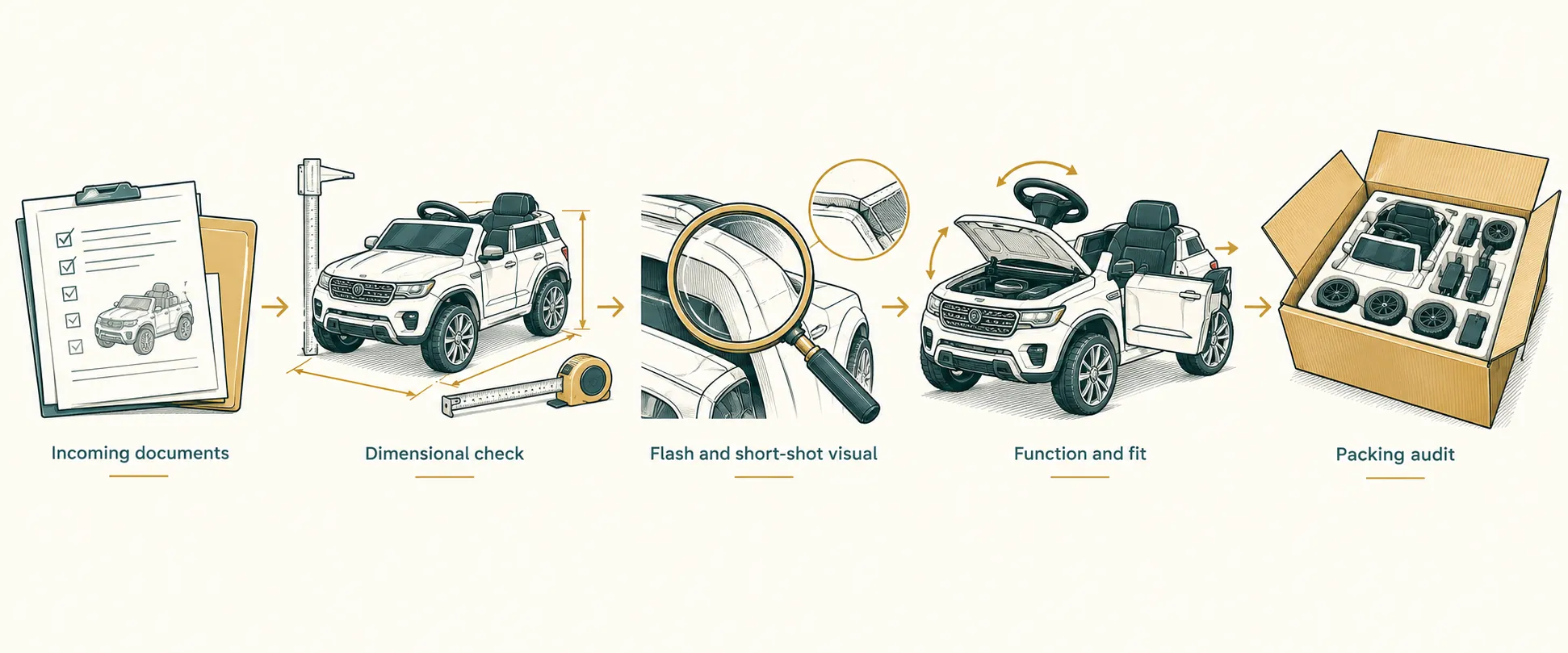
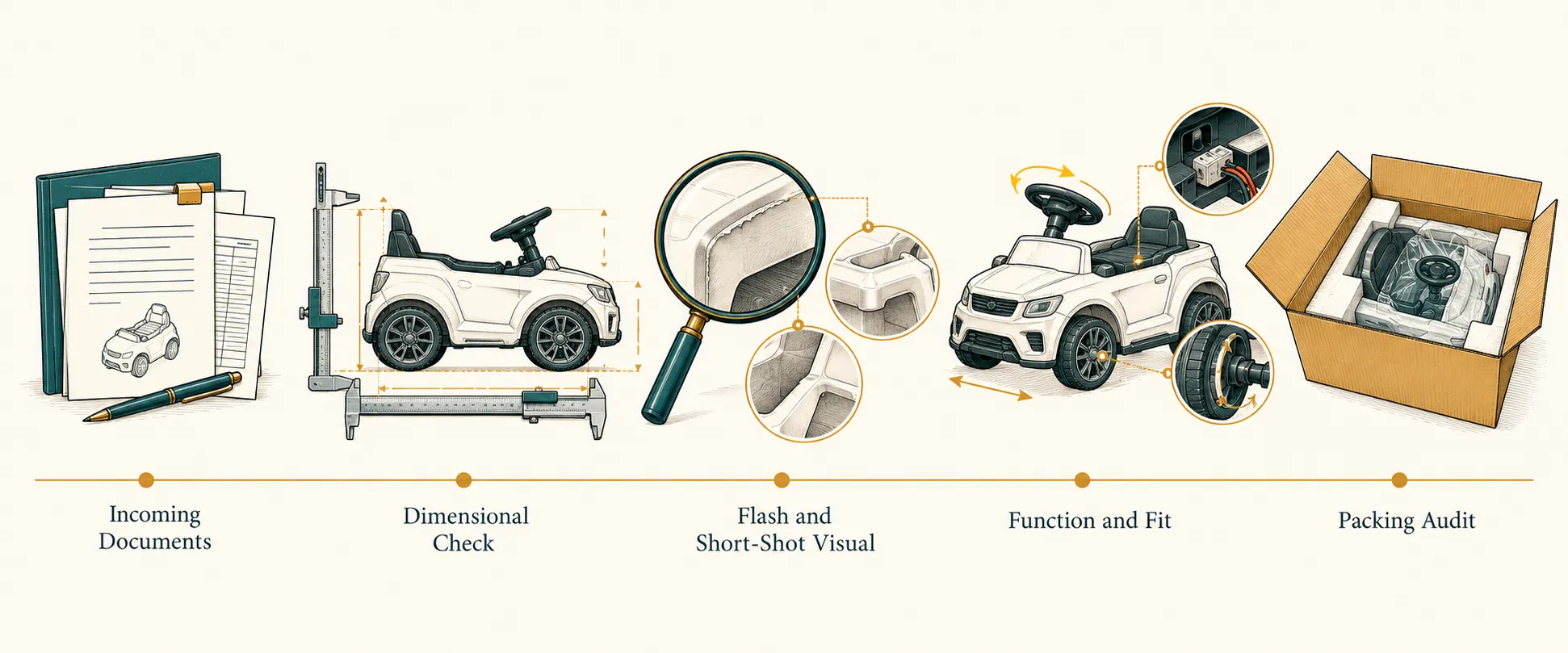
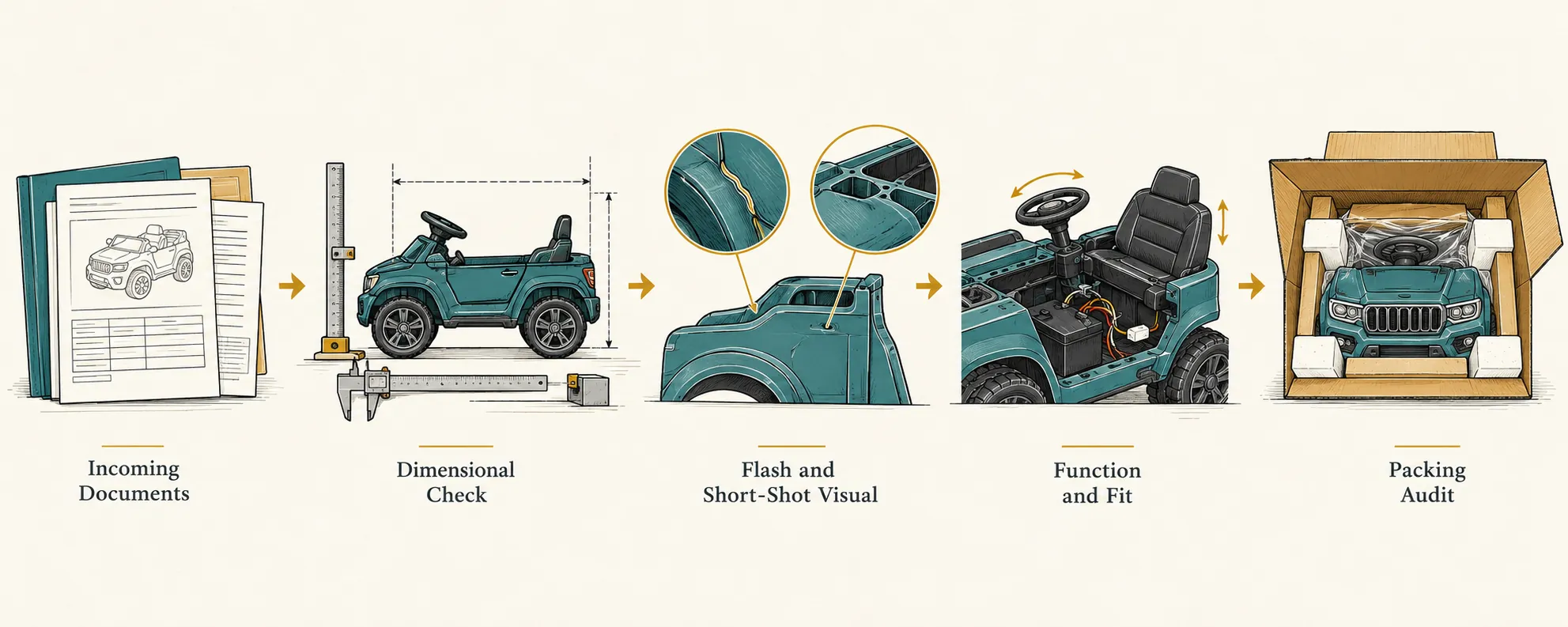
Assess Electric Cars & SUVs configuration control by requiring a revision-controlled specification that connects the quote, approved sample and production order. An electric ride-on toy supplier should identify the exact battery, motor, market variant and approved changes—not just a model name. Accept the configuration only after critical requirements are checked against appropriate documents or the sample; use conditional acceptance to manage specific open actions, not to authorize an undefined build. The practical outcome is a documented PO-release decision.
The worked example below uses an Electric Motorcycle Ride-On with configuration reference DLS-X12. It is a motorcycle, not a car or SUV; the configuration-control method transfers to those vehicle types, but its component specifications do not.
What separates a quoted configuration from a controlled configuration?
A controlled configuration ties specified requirements to identifiable evidence and an approved revision; a quoted configuration states what the supplier proposes to supply.
Keep three records distinct: the specified target, the actual observation or document finding, and the approval decision. Copying “12V” from a quote into an inspection sheet does not verify the electrical configuration. Likewise, confirming a battery label does not establish capacity performance or the identity of every other electrical component.
Evaluate the supplier's ability to connect these records. Ask for a configuration sheet that cross-references the commercial product identifier, supplier configuration reference, revision identifier and date. Then require the quote, sample confirmation and PO specification to reference that same baseline.
Which configuration fields should the buyer verify?
| Product identity | Catalog target: Electric Motorcycle Ride-On; product identifier ROW-353543; source type Motorcycle. Verification: cross-reference the quote, sample tag, configuration sheet and packaging identity. Record the identifiers actually shown and retain photographs or document references. |
|---|---|
| Configuration reference | Recorded reference: DLS-X12, identified as the factory-folder reference. Verification: obtain a supplier-issued configuration sheet linking this reference to the commercial product identifier and its current revision. Do not assume the reference is physically marked on the vehicle. |
| Nominal voltage | Quoted target: 12V. Verification: compare the configuration sheet with the sample's relevant component labels and electrical parts list. Record any conflicting ratings for technical review rather than resolving them from appearance. |
| Battery | Quoted target: 12V7AH × 1. Verification: confirm one installed battery and its stated 12V, 7Ah rating through the label and controlled parts list. Record its manufacturer and part reference to define the approved component. A matching label is not a capacity test. |
| Motor | Quoted target: 550 × 1. Verification: confirm the installed motor count and obtain the exact motor part reference or specification. Preserve “550” as the quoted designation; do not interpret it as a wattage rating. |
| Dimensions | Recorded size: 112 × 57 × 68. Verification: have the supplier specify the unit, dimension order and whether the figures describe the assembled vehicle or packaging. Measure the agreed object and record the result against the clarified specification. |
| Carton quantity | Recorded target: 1 unit per carton. Verification: check a packed sample and packing specification, then record the observed count. This packing quantity does not establish an order multiple. |
| Market variant | Quote designation: Southeast Asia variant. Verification: identify the buyer's actual destination country and define the corresponding configuration, labels, instructions and electrical accessories in the controlled specification. The regional designation alone is not a complete destination specification. |
| Controls and assembly | Supplier-described features: twist-grip throttle and one-button assembly. Verification: compare the assembly instructions with the sample and record what is assembled, how the mechanism operates and which control functions are demonstrated. Treat these as configuration checks, not safety certification. |
| Lights and audio | Supplier-described features: lights, music, and MP3/USB connectivity. Verification: identify the fitted functions and interfaces, demonstrate the agreed functions, and record the result. Clarify the intended USB and MP3 functions rather than inferring them from the connector alone. |
| Brand authorization | Supplier statement: officially licensed KTM styling. Verification: obtain and independently confirm documentation covering the relevant model, branding, territory and permitted commercial use. Keep the authorization finding separate from the physical configuration finding. |
How should the buyer assess the KTM authorization claim?
Treat the KTM authorization statement as a claim to verify, not as proof that the quoted model may be sold with that branding in the buyer's market.
Request the authorization document and its schedules or model list. Match the covered product to DLS-X12 and the quoted commercial identifier, then check the parties, validity period, territory and permitted branding on the vehicle, packaging and sales materials. Confirm the document's authenticity and scope through an appropriate rights-holder or authorized-party contact.
Do not assume a Southeast Asia quote establishes authorization for the United States, the EU or every country within Southeast Asia. Physical styling, a logo on a sample and a marketing description do not establish the scope of permission.
If branded supply is a purchase requirement, make authorization confirmation a PO-release condition. An alternative without the branding requires a separately agreed configuration and sample review; it is not an informal exception to the branded specification.
What sample and revision checks demonstrate configuration control?
A useful sample review connects the inspected unit to a dated specification revision and preserves the evidence needed to compare later production.
Assign the sample a unique reference. Photograph the complete vehicle, relevant component labels, controls, accessories and packaging. Have a competent inspector check accessible components using appropriate precautions; do not dismantle energized equipment merely to complete a worksheet. For each check, record the specified target beside the actual finding, not a copied description.
Request the current revision identifier and issue date, a controlled parts list, and a change history showing what changed from the previous approved version. Ask the supplier to cross-reference the quote to that revision. Identify the exact battery and motor parts, and define any controller, charger, harness or other component included in the agreed electrical configuration.
As a purchasing condition, require written notice and buyer approval before substitutions to controlled components, functions, branding or market-specific accessories. An approved change should update the affected documents and identify the orders or production lots to which it applies.
A matching sample establishes evidence about that sample. It does not prove that future production will match. Revision records and change approval support traceability, but they cannot by themselves prevent an undisclosed substitution; retain a production or pre-shipment comparison against the approved baseline.
When should the buyer accept, conditionally accept or reject?
| Accept | Critical targets match the relevant sample checks and documents; the quote and approval identify the same revision; required authorization scope is confirmed; and no release-blocking condition remains. Approve only that defined configuration. |
|---|---|
| Conditional acceptance | The configuration remains a candidate, with specific actions assigned to named people and calendar due dates. State whether each action blocks PO release. Do not treat an unresolved critical battery, motor, destination or required authorization issue as permission to proceed. |
| Reject | A material mismatch remains unresolved after clarification, the proposed build cannot meet an agreed critical requirement, or the supplier declines the configuration and change controls required for the order. A missing document alone does not prove dishonesty or manufacturing inability. |
How should the DLS-X12 decision and conditions be recorded?
| Baseline under review | Electric Motorcycle Ride-On; configuration DLS-X12; Southeast Asia quote variant; 12V; one 12V7Ah battery; one motor designated 550; recorded size 112 × 57 × 68; one unit per carton. Attach the supplier's quote number/date, specification revision/date and sample reference to this record. |
|---|---|
| Condition: configuration definition | Responsible role: supplier configuration owner. Required closure: issue the linked, dated specification and parts list; clarify the size unit and measurement basis; define the actual destination variant and component identities. Buyer action: assign the responsible person's name and a calendar due date before PO release. |
| Condition: sample comparison | Responsible role: buyer-appointed inspector. Required closure: record target-versus-observation findings, photographs, document references and the disposition of discrepancies against the identified revision. Buyer action: name the inspector and set the inspection and review dates. |
| Condition: authorization scope | Responsible roles: supplier authorization contact and buyer's designated authorization reviewer. Required closure: confirm the documented model, territory, parties, validity period and permitted branding for the intended order. Record the named owners and a calendar due date before releasing a branded PO. |
| Condition: revision and substitution control | Responsible roles: supplier configuration owner and buyer's technical approver. Required closure: agree the revision referenced by the PO, written change-notification requirements and the approval route for substitutions. Record both responsible names and the closure deadline. |
| Final approval | The authorized buying manager records their name, decision date, accept/conditional/reject outcome, approved revision and any remaining permitted exceptions. State explicitly whether PO release is authorized. |
| Follow-up closure | For each condition, retain the evidence reference, reviewer name, actual closure date and approval. If the resolution changes the configuration, update the baseline and reapprove the affected requirements before release. Preserve the original discrepancy and its resolution. |
What distinguishes a controlled substitution from an unresolved mismatch?
A controlled substitution is disclosed, evaluated and approved against an updated baseline; an unresolved mismatch remains a purchasing exception regardless of how similar the vehicle looks.
Consider the battery row. A sample with one battery labeled 12V7Ah supports the quoted voltage, labeled capacity and count. If the agreed specification also identifies a particular battery part, however, matching those headline ratings does not establish a part-level match. Compare the actual part reference and any applicable supporting documentation.
If the supplier proposes another battery, request the proposed part specification, identify which checks or documents the change affects, and record approval or rejection. Do not silently change the target to make the sample pass. Conversely, an explicitly approved substitution can become the new controlled baseline; a difference is not automatically a permanent rejection.
That is the supplier-evaluation test: can the supplier explain what is quoted, show what was sampled, identify what changed and obtain approval before the changed configuration is supplied?