
review / BUYER DESK
How to Spec a Lead Ride-On Electric Motorcycle & ATV Range
Published 2026-09-29 · Updated 2026-09-30
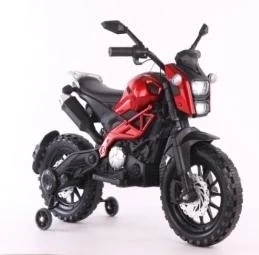
There is no single certificate that makes an electric ride-on motorcycle or ATV sellable. Pick your lead platform on three things you can actually verify: the configuration written on the quote, the physical golden sample on the QC shelf, and the paperwork that matches the exact lot and destination market.
This worksheet is built for importers, distributors and private-label buyers assembling a ride-on range. It shows how to read the current electric motorcycle and ATV catalog as a comparison set, how to use a specialty platform to differentiate shelf space, and which questions to put in the RFQ before you commit a container. If you are sourcing ride on toys wholesale, the order of checks below is what keeps a range from stalling at customs or at the second production lot.
What Actually Decides a Lead Platform
- Treat every quote as a claim, not a fact. The ROW-353521 Ride-On Tank quote variant lists a DLS-X6 configuration, 24V, 12V12AH x 2 battery, 555 x 2 motor, 125*61*61 size and carton quantity 1 — those are quote claims to be re-verified against the sealed sample, not observed specifications.
- A factory audit or social-compliance certificate does not certify the safety of a specific ride-on SKU. Electrical ride-ons may need insulation, dielectric or leakage-current checks depending on their power architecture, so ask which test covers which unit.
- The sealed golden sample on the QC shelf settles colour and function arguments that email never will. Compare bulk to that physical piece — colour, fit, flash, function — not to a photo.
- MOQ on the current catalog sits at 30 units per SKU, which makes a mixed-platform test order realistic before you commit to a lead item.
- Tooling, storage years and release conditions belong in the contract. A fee without frozen ownership and idle-storage terms is a handshake, and handshakes do not survive a supplier change.
Core Range vs Specialty Platform: What to Compare
| Electric Motorcycle Ride-On | ROW-353583 — entry-price core rider | Catalog price 24.8636 USD | MOQ 30 | Material varies by spec | Age/use varies by spec | Best for: opening price point in a mixed container | Rating: not supplied |
|---|---|
| Electric Motorcycle Ride-On | ROW-353494 — mid-price core rider | Catalog price 60.7121 USD | MOQ 30 | Material varies by spec | Age/use varies by spec | Best for: volume middle of the motorcycle line | Rating: not supplied |
| Electric Motorcycle Ride-On | ROW-353543 — upper-mid core rider | Catalog price 69.1494 USD | MOQ 30 | Material varies by spec | Age/use varies by spec | Best for: step-up option for retail tiers | Rating: not supplied |
| Electric Motorcycle Ride-On | ROW-353495 — higher-spec core rider | Catalog price 72.2397 USD | MOQ 30 | Material varies by spec | Age/use varies by spec | Best for: higher-ticket motorcycle slot | Rating: not supplied |
| Electric Motorcycle Ride-On | ROW-353583 vs ROW-353495 spread | Catalog prices 24.8636 USD vs 72.2397 USD | MOQ 30 each | Material varies by spec | Age/use varies by spec | Best for: pricing ladder inside one vehicle family | Rating: not supplied |
| Electric ATV Ride-On | ROW-353619 — lowest-cost ATV | Catalog price 24.0458 USD | MOQ 30 | Material varies by spec | Age/use varies by spec | Best for: promotional ATV entry | Rating: not supplied |
| Electric ATV Ride-On | ROW-353530 — mid ATV | Catalog price 84.695 USD | MOQ 30 | Material varies by spec | Age/use varies by spec | Best for: mainstream ATV volume | Rating: not supplied |
| Electric ATV Ride-On | ROW-353532 — mid-high ATV | Catalog price 88.7643 USD | MOQ 30 | Material varies by spec | Age/use varies by spec | Best for: ATV step-up beside ROW-353530 | Rating: not supplied |
| Electric ATV Ride-On | ROW-353531 — upper ATV | Catalog price 97.4335 USD | MOQ 30 | Material varies by spec | Age/use varies by spec | Best for: premium ATV tier | Rating: not supplied |
| Electric ATV Ride-On | ROW-353573 — upper ATV, lower entry than 531 | Catalog price 105.776 USD | MOQ 30 | Material varies by spec | Age/use varies by spec | Best for: alternative premium ATV | Rating: not supplied |
| Electric ATV Ride-On | ROW-353574 — high-ticket ATV | Catalog price 115.507 USD | MOQ 30 | Material varies by spec | Age/use varies by spec | Best for: flagship ATV slot | Rating: not supplied |
| Electric ATV Ride-On | ROW-353505 — highest catalog ATV | Catalog price 157.332 USD | MOQ 30 | Material varies by spec | Age/use varies by spec | Best for: hero display piece | Rating: not supplied |
| Ride-On Tank | ROW-353521 — specialty platform | Catalog price 145.852 USD | MOQ 30 | Material varies by spec | Age/use varies by spec | Best for: differentiated shelf presence, not core volume | Rating: not supplied |
Which configuration on the quote should I re-verify before ordering?
Re-verify every configuration line on the quote against the sealed sample, because a quote is a description and a sample is a physical object. For ROW-353521 the quote variant carries a DLS-X6 configuration, 24V, 12V12AH x 2 battery, 555 x 2 motor, 125*61*61 size and carton quantity 1 — treat each of those as a claim to be confirmed, and note which market the variant was quoted for.
Build the RFQ around the gaps. Ask which voltage and battery arrangement the sample actually ships with, what the carton quantity is for the destination, and whether the quoted variant is the same revision you will receive on the second lot. Revision drift between quote and bulk is the quiet killer of a pricing ladder.
Who should stock it: importers who can hold a sample across one full production cycle before scaling. If you cannot warehouse a sealed reference unit, you cannot run this check.
What does the CPSC data mean for a ride-on range, and what does it not cover?
CPSC reports an annual average of more than 800 deaths and roughly 100,000 emergency-department-treated injuries involving off-highway vehicles, with 2,448 OHV deaths from 2018 through 2020 and ATVs accounting for more than two-thirds of those deaths. Nearly 300 of that 2018-2020 total were children under 16, and CPSC estimates 94,700 OHV injuries in 2022, with ATVs involved in 92 percent of OHV injuries over five years.
That data set covers OHVs, ATVs, ROVs and UTVs — it is not electric-motorcycle-specific, and it is historical reporting, not a current-year total. CPSC also lists recalls and stop-use warnings, including recalls of youth ATVs and off-road motorcycles, so recall screening belongs in your platform due diligence alongside the mandatory ATV standard check.
The practical takeaway for assortment planning is to separate youth and adult models clearly in the catalog and to stock safety gear as attach items. Who should stock it: distributors serving markets with concentrated rider risk and dealers who will field the liability questions.
Which certification applies to a ride-on sold in the US versus the EU?
It depends on whether the unit is street-legal or off-road-only, and no single paper covers both. For US street legality, DOT compliance is component-based rather than one certificate: FMVSS 108 covers lighting, FMVSS 122 requires a stopping distance of 45.7 meters or less at 60 mph, and FMVSS 205 covers glazing, with a VIN and Manufacturer's Certificate of Origin needed for registration and titling. UL 2271 is the battery safety certification cited for e-motorcycles, and SAE J1772 governs charging connectors.
For the EU, UNECE issues ECE approvals and a Certificate of Conformity is needed for registration, while ECE R136 covers rechargeable energy storage systems in L-category vehicles. Stricter ECE R136 rules including a mandatory overcurrent test apply to all new certifications as of September 2025 — a time-sensitive item if your EU launch is in 2026.
A UKCA mark and a VOC file are different documents, and a certificate that does not match the lot is not paperwork. Ask your supplier to map market, lot and which file covers which test. Who should stock it: any buyer shipping into more than one jurisdiction, because the document pack drives registration and dealer acceptance.
How should I use a specialty platform like the Ride-On Tank in an assortment?
Give it a role, not a volume target. The Ride-On Tank | ROW-353521 is a themed specialty ride that lets children engage in imaginative military-style play, and its distinctive shape gives standout shelf presence — that is a differentiation play, and the 145.852 USD catalog price puts it above the mid ATV and motorcycle tier.
Pair it against your core riders rather than replacing them. A realistic structure is one specialty SKU for shelf story plus a motorcycle ladder and an ATV ladder for turnover, with MOQ 30 per SKU keeping the test order small. Who should stock it: retailers and importers who need a hero piece for a catalog spread or a trade stand and whose core riders already cover the volume tiers.
What to confirm before you commit: whether the quote variant matches the sample, whether the carton quantity of 1 fits your pallet math, and whether the destination market's paperwork covers this specific unit.
How we picked and how to run the worksheet
Selection criteria were deliberately narrow: catalog SKUs with a stated MOQ of 30, a published catalog price, and a documented configuration trail where one existed. The electric motorcycle and ATV SKUs form the core-range comparison set, and ROW-353521 is the worked specialty example.
Three checks gate every pick. First, separate quote claims from observations — the ROW-353521 configuration lines are quote claims, not verified specifications. Second, verify sample, revision and documents together, because a certificate that does not match the lot is not paperwork. Third, confirm the electrical-safety test regime for the specific power architecture and that measurement equipment used for release decisions carries a current calibration or verification status.
Two things this worksheet deliberately does not do: it does not rank factories, and it does not publish ratings, because none were supplied. Where a value is not in the materials, it says so rather than filling the gap.
Run the worksheet as a physical process, not a spreadsheet: the sealed golden sample on the QC shelf is what ends a colour or function dispute, and emails never will. Buyers who approve only a photo pay for it on the second lot.
What should the RFQ itself contain?
Write Incoterms with the version and a named place — Shantou or Shenzhen as actually booked — because FOB without a named place has started freight arguments longer than the production run. Specify the destination market, the lot reference and which test file is expected to cover which unit.
On tooling and private label, freeze the fee, ownership, storage period and what happens if the tool sits idle. On restock, ask what changes between lot one and lot two and how the supplier will notify you, then hold the sealed sample against that answer.
FAQ for ride-on motorcycle and ATV buyers
What is the MOQ on the current electric motorcycle and ATV ride-on catalog?
MOQ is 30 units per SKU across the catalog records available here, including the motorcycle and ATV SKUs and the Ride-On Tank. Confirm the MOQ for your specific destination and configuration at quotation, since MOQ can move with variant and packaging.
Can I run a test order before committing to a lead platform?
Yes — with MOQ at 30 per SKU, a mixed-platform test order is realistic. Use it to validate the sample, the paperwork and the second-lot behaviour of your chosen lead item before scaling volume.
Does a factory audit or social-compliance certificate cover ride-on safety?
No. A factory audit or social-compliance certificate does not certify the safety of a specific ride-on SKU. Ask which test covers which unit, and for electrical ride-ons confirm whether insulation, dielectric or leakage-current checks apply to the power architecture you are buying.
Do I need UL 2271 and SAE J1772 for every electric motorcycle SKU?
Not universally — treat them as requirements to confirm per SKU and per market. UL 2271 is the battery safety certification cited for e-motorcycles and SAE J1772 governs charging connectors; where they apply depends on your destination's rules and your dealer's insurability requirements.
What changed in ECE R136 for EU-bound stock?
Stricter ECE R136 rules, including a mandatory overcurrent test, apply to all new certifications as of September 2025. If your EU launch is in 2026, confirm your supplier's battery certification is issued under the current regime.
How do I avoid a second-lot surprise on colour or function?
Approve against a sealed golden sample held on the QC shelf, not a photo. Bulk is compared to that physical piece for colour, fit, flash and function, which is what actually resolves a dispute after production.
Sources
Related Products & Categories
Build your lead platform order
Send the RFQ with your destination market, target configuration and lot reference, and ask for the test file that covers each unit. Browse the current range at /collections/electric-motorcycles-atvs/ to set your motorcycle and ATV ladder before you lock the lead platform.