
sourcing / BUYER DESK
Compare Ride-On Carton Data in Wholesale Quotes: 2026 Guide
Published 2026-10-02 · Updated 2026-10-02
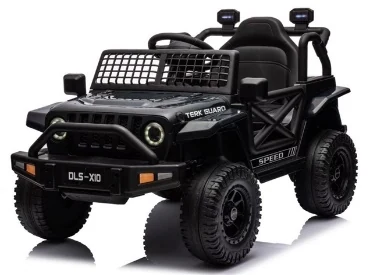
A common and expensive buyer mistake is comparing wholesale quotes using only the headline FOB price and a single carton quantity figure, without checking how the carton data was measured, which SKU variant is quoted, or whether the product dimensions inside that carton actually match the sample. To compare Electric Cars & SUVs carton data in a quote correctly, build a SKU-level worksheet before you negotiate: lock the exact configuration code, separate quoted claims from observed facts, and demand that carton dimensions come from measured production packaging rather than a preliminary artwork file. This guide gives you that worksheet plus the supplier questions that expose mismatches before they become chargebacks at the port.
What to verify before you compare any two ride-on quotes
- Compare configuration codes, not brand names. A 12V tractor quoted as one variant can ship with a different battery or motor combination than the version you sampled; freeze the exact variant code in the quote before you line up columns.
- Carton quantity of 1 is normal for large ride-on units, so your real freight comparison unit is cubic metres per unit, not pieces per carton. Two quotes with identical carton quantity can differ by 20% or more in volume once measured dimensions are applied.
- Package dimensions and quantity per carton should be based on measured production packaging, not only a preliminary artwork file. If the supplier cannot show a measured carton spec, treat the shipping data as provisional.
- Separate what the quote claims from what you observed on the sample. Colour, fit, flash, and function are verified against a sealed physical golden sample, not against an email or photo approval.
- Map every compliance document to the specific market, lot, and test it covers. A file that does not match the lot is not valid paperwork, even if the certificate looks complete.
What counts as carton data in a ride-on quote?
Carton data in a ride-on vehicle quote is the set of physical and documentary attributes you can verify per SKU: carton quantity, measured carton dimensions, product dimensions, battery specification, motor specification, configuration or variant code, factory folder reference, and which compliance documents cover which market and lot. These fields are what determine your landed cost, your warehouse slotting, and whether the shipment clears customs without a paperwork hold. A quote that lists only price and a single carton figure is not a comparable quote.
The reason this matters for ride-on toys is that the unit is bulky and the electronics are regulated. A variation of a few centimetres in carton length changes how many units fit in a 40HQ container, and a battery or motor swap changes both the product's compliance profile and its retail price positioning. For a worked example of how these fields interact, see the illustrative scenario below.
How do you separate quoted claims from observed facts?
You separate quoted claims from observed facts by tagging every field in your worksheet with its source: quote, factory folder, sample observation, or document review. A field that came from the supplier's email is a claim. A field you measured on a sample or read in the factory folder is an observation. The two should agree before you place a bulk order; where they disagree, the observation wins.
The control that enforces this is the sealed golden sample. A sealed physical reference piece kept on the QC shelf settles colour disputes that email threads cannot: bulk is compared to that piece on colour, fit, flash, and function. Buyers who approve only a photo pay for it on the second lot. Add a column to your worksheet called 'Golden sample on file?' with a yes/no answer. If it is no, your quote comparison is missing its most important control.
The same logic applies to documents. UKCA plus a VOC file on an electric bubble machine are different papers, and a buyer once tried to use one certificate for both. Map market, lot, and which file covers which test. Paperwork that does not match the lot is not paperwork.
What carton fields should appear in your comparison worksheet?
Your worksheet should have one row per SKU variant and these columns: SKU, product name, configuration code, battery, motor, product dimensions, carton quantity, measured carton dimensions, carton gross weight, market variant, document map, golden sample status, and quote-vs-observed flag. Fill only what the supplier can support with a document or a sample. Leave unknowns blank rather than guessing.
Here is how that looks for one fully specified ride-on tractor, using the catalog data available for this SKU. The configuration code is DLS-X18, the electrical spec is 12V with a 12V7AH x 1 battery and 550 x 2 motor, the product dimensions are 144*52*53, and the carton quantity is 1. The quote variant covers Europe and US markets, which means the document map must show which file applies to which market. If you are comparing this against a pickup or fire truck variant, you need the same fields for each before the numbers mean anything.
Step-by-step carton data comparison checklist
| 1. Freeze the SKU and configuration code | What to check: the quote names the exact variant code, battery, and motor. Red flag: the quote says '12V tractor' with no variant code, so you cannot tell which battery or motor combination is priced. |
|---|---|
| 2. Get measured carton dimensions | What to check: carton length, width, height, and gross weight come from measured production packaging. Red flag: dimensions trace back only to a preliminary artwork file or a CAD drawing not yet produced. |
| 3. Confirm carton quantity and inner pack | What to check: pieces per carton and any inner pack match the factory folder. Red flag: the quote shows a carton quantity that conflicts with the folder, or omits inner pack entirely. |
| 4. Map documents to market and lot | What to check: each compliance document is linked to a specific market, lot, and test scope. Red flag: one certificate is offered as covering two different markets or two different product types. |
| 5. Verify the golden sample | What to check: a sealed physical sample exists on the QC shelf and bulk is compared against it. Red flag: approval was given by photo or email only, with no physical reference retained. |
| 6. Separate claim from observation | What to check: every worksheet field is tagged quote, folder, sample, or document. Red flag: fields are mixed with no source tag, so you cannot tell which numbers are verified. |
| 7. Check order-split traceability | What to check: if the SKU is produced across factories or lots, the split is visible in the order and carton code. Red flag: the quote does not disclose a multi-factory or multi-lot production plan. |
| 8. Confirm carton marks | What to check: carton marks identify SKU, quantity, destination, handling information, and lot or shipment reference. Red flag: carton marks are generic with no lot or shipment reference for warehouse receipt. |
Worked example (illustrative, not a real shipment)
This scenario is illustrative and does not describe a real order. A buyer is comparing two quotes for a 12V ride-on tractor, 300 units, shipping to two destinations: one inland US warehouse and one EU distribution centre. Quote A lists a carton quantity of 1 and a carton dimension of 144 x 52 x 53 cm, matching the product dimensions exactly. Quote B lists the same carton quantity but a carton dimension 4 cm longer on one side and 2 cm taller, which the supplier says is 'approximate pending final packaging.'
At 300 units, the difference between Quote A and Quote B carton volumes is enough to change container utilisation and the per-unit freight allocation. The buyer who compares only the FOB price will pick the cheaper quote and then discover at booking that the container will not fit the planned quantity. The step where the shipment gets held is not customs; it is the warehouse receiving check, where carton marks without a lot or shipment reference cannot be reconciled against the purchase order.
The fix is procedural, not commercial. Ask both suppliers for measured carton dimensions from the production packaging, not from an artwork file. Ask which configuration code applies to the Europe quote versus the US quote, and what changes between them. Ask for the document map showing which file covers which market and lot. The quote that can answer all three is the one you can actually plan a container around.
What to ask suppliers before you compare quotes
Send these questions to every supplier whose quote you are considering. The answers become the columns in your worksheet, and a supplier who cannot answer them is telling you something useful about their readiness.
RFQ checklist for ride-on carton data
| Carton dimensions | What are the measured carton length, width, height, and gross weight from production packaging, and do they match the factory folder? |
|---|---|
| Product dimensions | What are the assembled product dimensions, and how do they compare to the carton interior? |
| Configuration code | Which variant or configuration code applies to this quote, and what changes between the Europe and US versions? |
| Battery and motor | What battery and motor specification is included, and are there alternative specifications at a different price? |
| Carton quantity and inner pack | What is the carton quantity and inner pack configuration, and does it match the factory folder? |
| Document map | Which compliance document covers which market and which lot, and can you show the lot linkage? |
| Golden sample | Is there a sealed golden sample on the QC shelf for this SKU, and can we compare bulk against it? |
| Carton marks | What carton marks will be applied, and do they include SKU, quantity, destination, handling information, and lot or shipment reference? |
| Order-split disclosure | Will this SKU be produced across more than one factory or lot, and if so, how is the split shown in the order and carton code? |
| Tooling policy (private label) | For private-label tooling: what is the fee, who owns the tool, what is the storage period, and what happens if the tool sits idle? |
| Button-cell closure | For any SKU with button-cell electronics: how does the compartment close, what tool is needed to open it, and where is the warning? |
How do you handle private-label tooling in a carton data comparison?
Private-label tooling adds a set of commercial terms that sit outside the carton data but affect your total cost and your ability to reorder. A buyer once asked who owned the tool after paying a fee, and the contract had not frozen storage years or release conditions. The lesson is that tooling policy is a document, not a handshake. Before you compare quotes that include custom tooling, get the fee, the ownership terms, the storage period, and the conditions for release or idle tooling in writing.
ODM normally means the supplier offers an existing or supplier-developed design that the buyer may brand or customise, but ownership and exclusivity are separate questions. A quote that says 'ODM available' without addressing tool ownership and storage is not a complete quote for a private-label program. Add these terms to your worksheet as a separate section so they do not get lost in the carton columns.
What should you check for button-cell electronics in ride-on vehicles?
Button-cell toys are a compartment and warning problem, and ride-on vehicles with electronic sound or light modules can fall into this category. Check screw closure, tool access, and the warning before you discuss the vehicle function. A cute electronic that opens with fingernails does not ship. US button-cell rules and the door design are the same conversation, so if your quote includes a button-cell component, the closure mechanism and warning label belong in your carton data review.
This is not a paper exercise. If the compartment opens without a tool, the product does not meet the design expectation regardless of what the test report says. Ask for the closure design and the warning placement as part of the quote, and compare that against the sample.
What compliance timeline should ride-on importers watch in 2026?
Compliance timelines for ride-on toys vary by market and product category, and the official text does not always confirm the date a rule actually applies to a specific product. For the Great Britain market, manufacturers and importers placing toys on the market must provide their name or registered trade name and postal address in the required manner. That requirement is about identity and traceability on the product or packaging, not about a single dated deadline you can copy into a purchase order.
For EU and US markets, the applicable standard and the date it applies to your product category should be confirmed against the official text for that category, not inferred from a secondary article or a supplier's summary. If a supplier tells you a rule is mandatory from a specific date, ask them to point to the official source that confirms the application date for that product category. If they cannot, treat the timeline as not confirmed from official text and plan your order accordingly.
Which red flags should stop a quote comparison?
Stop the comparison when the supplier cannot provide measured carton dimensions, when the configuration code is missing or changes between the quote and the sample, when one certificate is offered as covering two different markets or product types, when no sealed golden sample exists, or when the quote does not disclose a multi-factory or multi-lot production plan. Each of these is a control gap that will surface later as a freight variance, a customs hold, or a quality dispute.
A quote is not a price list. It is a set of commitments about what will be produced, packed, documented, and shipped. If the carton data cannot be verified against a physical reference and a document map, you are comparing marketing copy rather than supply capability.
Sources
Related Products & Categories
Build your ride-on quote comparison worksheet
Use the RFQ checklist above as the template for your next ride-on quote comparison. Start with one SKU, freeze the configuration code, request measured carton dimensions, map the documents, and verify the golden sample before you negotiate price. Bring the worksheet to your next supplier conversation, and let the measured data set the shortlist.