
sourcing / BUYER DESK
Mixed Electric Cars & SUVs Order by Carton: 2026 Buyer Plan
Published 2026-10-03 · Updated 2026-10-03
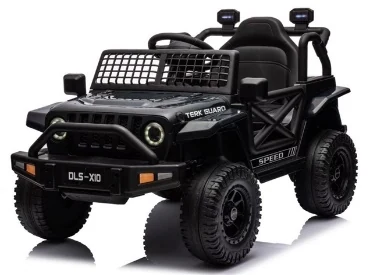
Plan a mixed Electric Cars & SUVs ride-on order by carton by building one SKU-level worksheet before you negotiate: lock each carton quantity, voltage and battery configuration, motor count, product size, and destination-market variant, then convert those cartons into CBM against your container. The carton is the unit of risk in this category — it carries the label, the battery paperwork, the compliance file number, and the physical abuse test record, so a wrong carton quantity or an unconfirmed quote variant is what actually stops a shipment at the port.
This is a procurement framework for importers, distributors, retail buyers and private-label sourcing managers running mixed loads, not a parent-facing buying guide. The worked example uses catalog facts for an Electric Go-Kart Ride-On (ROW-353610, factory folder DLS-K10) to show how a single row becomes a carton plan.
What buyers should lock before the PO goes out
- Treat every catalog spec as a quote claim until it is verified on a sample or an inspection record. A variant labelled for Europe and US quote is a pricing and configuration assumption, not a confirmed build for your lot.
- One carton quantity per SKU is the number your entire order math rests on. Confirm carton quantity, carton dimensions and carton weight per SKU, because CBM fill and dimensional weight both change when a carton quantity is wrong.
- Ask for the sealed golden sample held on the QC shelf, referenced by revision. Colour, fit, flash and function arguments get settled by the physical piece, not by email threads or photo approvals.
- Map each certificate to a market and a lot. A UKCA document and a VOC file are different papers serving different purposes; paperwork that does not match the lot is not paperwork.
- Write the inspection plan into the PO. Defect classes, isolation of a failed lot and release only after rework belong in agreed terms — the sampling number comes from that agreed plan, not from a catalogue sentence.
Why plan by carton instead of by total units?
Carton-level planning is the only way to reconcile a mixed ride-on order against container space, freight cost and compliance evidence at the same time. Ride-on vehicles are bulky and heavy relative to their unit value, so unit counts hide the two variables that decide whether a mixed load works: how many cartons you are actually shipping, and how much CBM they consume.
The second reason is traceability. When one SKU is produced across factories or lots, the split should be visible in the order, the carton code and the compliance evidence. If your worksheet tracks units only, a split lot arrives as an invisible mix. Track cartons and lot codes instead, and the same shipment becomes auditable.
Ride-on units usually ship one per carton in a heavy-duty format, so the carton is both the shipping unit and the retail outer. That dual role is why it needs its own column in your worksheet rather than a footnote.
Step 1: Define the order frame before you open the catalog
Confirm four things first: your buyer role (importer, distributor, retail or private-label), the destination market, the container plan, and whether the assortment is yours or a retailer's. A 20GP/40HQ mixed load built as high-turnover filler alongside other categories behaves differently from a single-category container. Mixed-container importers often use ride-ons to complete CBM next to outdoor goods, and unbranded filler complicates the storytelling to retail accounts — so decide early whether these units carry your brand or a generic label.
Checkpoint: you can write the container type, the destination market and the branding decision in one sentence. Supplier question: "For this order, which market variant are you quoting, and is the unit branded or unbranded?"
Step 2: Build the SKU worksheet from exact catalog facts
One row per SKU, with columns for SKU, product name, configuration, voltage, battery, motor, product size, carton quantity, carton dimensions and carton weight. Fill only what the catalog or the supplier states — leave anything unconfirmed blank rather than estimating, and mark the blank as an open item to close before the PO.
Worked example (illustrative, not a real shipment): Row 1 is an Electric Go-Kart Ride-On, SKU ROW-353610, factory folder DLS-K10, configuration DLS-K10, 12V, battery 6V4.5AH x 2, motor 390 x 1, product size 81.5*54.5*43, carton quantity 1. That row is complete enough to price and to plan CBM for one carton per unit. Row 2 is a different ride-on SKU where the carton quantity has not yet been confirmed — it stays flagged, and it does not get a CBM estimate until the number exists.
Checkpoint: every row shows a source — catalog fact, supplier quote, or observed on sample. No row shows a guess. Supplier question: "For each SKU, what is the confirmed carton quantity, carton dimensions and carton weight?"
Step 3: Separate quote claims from observations
Mark each spec as supplier quote or observed/verified. A quote variant covering Europe and US pricing is a commercial assumption; do not promote it to a confirmed specification until the sample and the order documents agree. This single discipline prevents most post-deposit disputes, because it tells you which numbers you are allowed to build a margin on.
For electric ride-ons, the specs that most often drift between quote and reality are battery configuration, motor count and product dimensions. Each of those changes carton weight, carton dimensions or runtime claims, so each one feeds back into the carton math.
Checkpoint: the worksheet visually distinguishes the two categories. Supplier question: "Which of these figures is your quoted specification, and which has been verified on a production sample?"
Step 4: Convert cartons to CBM and fill the container
Multiply cartons per SKU by the carton volume to get total CBM, then test that total against the container type. Keep the smallest appropriate carton per SKU — carton size drives dimensional weight and freight cost, and unnecessary void space is paid for twice, in freight and again in damaged-goods claims.
Illustrative worked scenario (not a real shipment): an order of roughly 400 cartons across two ride-on SKUs, split between two destinations with different packaging requirements — one destination needs retail-ready cartons with consumer labelling, the other accepts plain export cartons. The plain-carton leg fills faster, so the worksheet shows the retail leg consuming more CBM per unit. The step that would hold the container is the carton-quantity confirmation: if a second SKU turns out to ship two units per carton instead of one, the unit count is fine but the carton count, label count and CBM estimate are all wrong, and the load either overflows or ships short.
Checkpoint: total cartons, total CBM and container fill percentage are stated, with every assumption traceable to a confirmed number. Supplier question: "How many cartons per container for this mix, and what changes if we switch the retail leg to plain export cartons?"
Step 5: Verify the sample, the revision and the documents
Require a sealed golden sample held on the QC shelf as the physical reference for colour, fit, flash and function, and confirm which revision that sample represents. Buyers who approve only a photo pay for it on the second lot. Emails do not settle a colour dispute; the sealed piece does.
Then map documents to market and lot. Manufacturers and importers placing toys on the Great Britain market must provide their name or registered trade name and postal address in the required manner, and market-specific certificates are not interchangeable. A UKCA document and a VOC file are different papers; a buyer once tried to use one certificate for both on an electric bubble machine, which is the same mistake as filing a Europe-market certificate against a US-bound lot.
If a change can affect safety or compliance, the retest decision should be documented even when the product name and SKU stay the same. Ride-on and car toys should also check wheel retention, axle deformation, rotation and accessible end exposure after the relevant abuse sequence, and electric toys may require insulation, dielectric, leakage-current or other electrical-safety checks depending on their power architecture.
Checkpoint: each certificate is mapped to a market and a lot, and the sample revision is recorded next to the SKU. Supplier question: "Which certificate covers which market and which lot, and where is the sealed sample held?"
Carton-planning checkpoints and their red flags
| Order frame defined (role, market, container, branding) | Check: container type and destination written down. Red flag: quoting a single market variant for a two-market order. |
|---|---|
| SKU worksheet complete against catalog facts | Check: every row sourced as catalog, quote or observation. Red flag: a CBM estimate built on an unconfirmed carton quantity. |
| Quote claims separated from observations | Check: Europe and US quote variant flagged as unverified. Red flag: margin calculated on an unverified battery or motor spec. |
| Cartons converted to CBM and tested against container | Check: total cartons and fill percentage stated. Red flag: unit counts used as a proxy for container space. |
| Sealed golden sample and revision confirmed | Check: physical reference on the QC shelf, revision recorded. Red flag: approval based only on a photo or an email thread. |
| Certificates mapped to market and lot | Check: each document tied to a market and a lot code. Red flag: one certificate reused across markets or lots. |
| Inspection plan written into the PO | Check: defect classes, lot isolation and rework release agreed. Red flag: a sampling number quoted from a catalogue instead of the PO. |
| Line clearance between SKUs confirmed | Check: labels, colours and work instructions cleared before a new SKU starts. Red flag: a mixed label reaching a retailer carton. |
| Channel and account fit checked | Check: wholesale-only status and the assortment story for the target account. Red flag: generic unbranded filler that does not fit the retailer's story. |
What to ask suppliers before you commit (RFQ checklist)
Send these as a written list and require written answers. Verbal confirmations do not survive a carton-count dispute.
1. Confirmed carton quantity, carton dimensions and carton weight per SKU. 2. Configuration and revision the sealed golden sample represents, and where it is held. 3. Which certificate covers which market and which lot, with the lot linkage shown. 4. The agreed inspection plan on the PO: defect classes, failed-lot isolation, release only after rework. 5. Line clearance controls between SKUs — labels, colours, work instructions. 6. Wholesale-only status: is this SKU sold B2B only, or also to end consumers? 7. For ROW-353610: confirm 12V, 6V4.5AH x 2 battery, 390 x 1 motor, size 81.5*54.5*43, carton quantity 1, and which market variant the quote covers. 8. Any SKU produced across factories or lots: how is the split shown in the order, carton code and compliance evidence?
A factory's stated capacity is a planning input, not a verified fact until the product type, machine mix, shifts, tooling and recent records are checked. Ask for the recent records, not the headline number. And if you want ODM rather than straight supply, remember that ODM normally means the supplier offers an existing or supplier-developed design that the buyer may brand or customise — ownership and exclusivity are separate questions you must settle in writing.
What to re-check on 2026 paperwork
Two things deserve a fresh look in 2026: document-to-market matching and electrical-safety scope. Market-specific marks and files are not interchangeable, and the identity and address obligations for the market you are selling into must be met by the responsible party in the required manner.
Where an official text does not confirm the application date for a change affecting your product category, treat the timeline as not confirmed from official text rather than assuming a fixed compliance date. Digital product passport schemes, general product-safety rules and toy-safety rules are separate regimes with separate clocks — do not merge them into one deadline in your planning sheet. If you cannot find the application date in the official text, keep the item open and ask your supplier which version of the requirement their file was built against.
Sources
Related Products & Categories
Build the worksheet, then request the quote
Start with the carton column, not the price column. Once carton quantity, dimensions, weight and the sealed sample revision are confirmed per SKU, the quote conversation becomes a comparison instead of a negotiation. Browse the Electric Cars & SUVs collection to shortlist models and the Drift, Go-Kart & Racing Rides collection for the go-kart format used in the worked example, then send the RFQ checklist above to the supplier and ask for written answers against each line.