
sourcing / BUYER DESK
Sample Approval Brief for Electric Motorcycles & ATVs
Published 2026-10-09 · Updated 2026-10-09
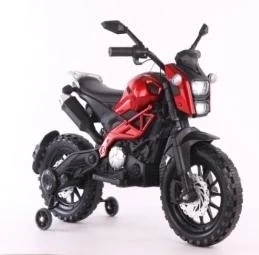
A sample approval brief for electric motorcycles and ATVs is a written, SKU-level record that fixes the physical golden sample, the document set, the market variant, the packaging and language, and the approval revision before bulk production starts — and it ends in one specific buying decision: approve the SKU, hold for missing evidence, or substitute another SKU. The brief is not a folder of photos. It is the document that a QC shelf, a customs broker, and a reorder all point back to.
The brief matters more here than in most ride-on categories because these are not simple toys. In the US, street registration hinges on a 17-digit VIN and a Manufacturer's Certificate of Origin (MCO); an MCO stamped "For Off-Road Use Only" can block a street title depending on state rules, while federal DOT/FMVSS rules govern manufacturing and states handle registration, licensing and insurance. In the EU and UK, road legality runs through L6e-A/L7e homologation and post-Brexit type approval rather than a toy certificate. So when importers ask where to buy electric motorcycles and ATVs in bulk, the honest answer is: the supplier conversation is easy, the approval paperwork is where containers get stuck.
What Buyers Should Lock In Before Approving a Sample
- Approve against a sealed physical golden sample held on the QC shelf, compared on colour, fit, flash and function — an email or photo approval gives you nothing to argue with when the second lot arrives.
- Split the brief into two document streams: vehicle-classification papers (VIN, MCO wording, homologation) and product-safety papers. A UKCA file and a VOC file are different papers covering different things; a file that does not name the correct market and the correct lot is not paperwork.
- Write the market variant into the brief explicitly. A quoted configuration for one region does not automatically apply to another; state which variant the sample represents and which one you are ordering.
- Treat packaging and instruction language as a brief item, not an afterthought — mixed-container importers have lost retail storytelling because generic packaging did not match the destination market.
- Resolve the brief to one decision per SKU — approve, hold, or substitute — and record the revision number so an old drawing or spec cannot silently return to use.
What is a sample approval brief, and why does it decide the order?
A sample approval brief is the single reference document that a factory, a QC team and a buyer all sign off before mass production: what was sampled, under which configuration, against which documents, in which packaging, at which revision. Its output is a decision, not a description. Everything else — price negotiation, container planning, reorders — depends on that decision being written down.
The failure mode it prevents is approval drift. A buyer signs off on a photo; the factory ships a slightly different colour, a different charger, or a carton that no longer matches the destination label. Because nothing physical was sealed and nothing was versioned, the argument has no referee. The sealed golden sample on the QC shelf is that referee.
Which SKU is the anchor, and what does the quote actually claim?
Pick one fully specified SKU as the anchor of the brief and treat every quoted value as a claim to be verified, not as a fact. In the current catalog, an item such as the Electric Go-Kart Ride-On (SKU ROW-353608, source type Mini Off-Road Go-Kart) arrives with a quote variant: configuration DLS-K10, 12V, battery 6V4.5AH x 2, motor 390 x 1, size 81.5*54.5*43, carton quantity 1, quoted for the Southeast Asia market. Each of those fields belongs in the brief under a heading that says "quoted — verify on sample".
A quote reflects a factory folder and a commercial conversation; the sample reflects what the factory actually built. The brief's job is to close the gap between the two, field by field, with the supplier confirming or correcting each value.
For the broader Electric Off-Road SUV Ride-On range, catalog entries carry a minimum order quantity of 30 and listed prices ranging roughly from the 60 USD band to the 170 USD band depending on the SKU. Those are catalog terms, not negotiated terms for your destination, and they should be re-confirmed for your market variant rather than copied into the brief as final.
How do I build the candidate set before the brief is final?
Build a candidate worksheet first, then narrow it with the brief — not the other way round. List every SKU you are considering as a row with columns for configuration, quoted market variant, MOQ, quoted price, packaging language, documents supplied, and status. Leave the configuration and document columns empty until you have read the individual product record for that SKU; do not carry one SKU's quoted numbers across to another.
The reason to keep the set wide at this stage is assortment fit. A mixed-container importer completing cubic metres alongside outdoor goods has a different job for a filler SKU than a specialist retailer building a single-category wall. A compact ride-on that fills space and reorders quickly earns its slot differently from a premium unit that carries margin. Both can be right; the brief should say which job the SKU is being hired for.
What goes into the brief's five sections, in order?
Sequence the brief so that physical verification comes before paperwork, and paperwork before commerce. The order matters because each section can invalidate the ones after it.
1) Golden sample. Identify the sealed physical piece, where it is held, and the four comparison points for bulk: colour, fit, flash, function. Name the person who sealed it and the date.
2) Document-to-lot matching. For each file, record which market it covers, which lot it names, and which test it evidences. If a file does not name this lot, it does not count.
3) Market and quote variant. State which regional variant the sample represents and which variant you are ordering — they are not always the same.
4) Packaging and instruction language. Specify carton markings, retail packaging, and the instruction language, and confirm both against the destination market.
5) Revision control. Record the approved revision number and tie it to the tooling, the first-article inspection, the test sample and the production order, so an older file cannot quietly come back into use.
Which documents must the brief name for each destination market?
The brief should name, per destination, the exact file that covers that market and that lot — and it should say plainly what is not covered. Two documents that look similar can cover entirely different things: a UKCA marking file and a VOC file on the same electric product are different papers, and a buyer who tries to use one for the other ends up with a file that proves nothing at the port.
For the United States, if street registration is the goal, the brief needs the 17-digit VIN and an MCO whose wording does not restrict the vehicle to off-road use; an off-road-only MCO may cause a state DMV to deny a street title, and requirements vary by state. For the EU and UK, the relevant layer is L6e-A/L7e homologation and post-Brexit type approval and DVLA rules, not a toy-safety file. For off-highway use, the classification question is whether the vehicle is sold as an OHV or as a street-legal unit — because that choice drives registration, insurance and customer expectations.
The classification trap is real: insurers have misclassified street-operated machines as off-road ATVs, leaving a coverage gap. Ask the supplier what the vehicle is classified as, and confirm with your insurer that they agree before you commit to the order.
Where do packaging, language and assortment fit in the brief?
Packaging and language belong in section four, not in the shipping instructions that get written a month later. If your retail partners need short instructions in a specific language and simple packaging that fits their shelf, write that into the brief and approve a physical packaging sample alongside the vehicle sample.
Assortment fit is the commercial checkpoint that closes the brief. A filler SKU that completes a container alongside outdoor goods and reorders faster than pricier categories is doing a specific job; the brief should state that job so the approval decision is made against the right standard.
Worked example (illustrative, not a real shipment)
A distributor is preparing a mixed 40HQ with roughly 600 ride-on units across two destination markets — one EU retail chain and one Southeast Asian distributor — and two packaging variants. The anchor SKU is quoted as ROW-353608, DLS-K10 configuration, 12V, 6V4.5AH x 2, 390 x 1, size 81.5*54.5*43, carton quantity 1, from the Southeast Asia quote variant. The EU packaging variant requires a different instruction language and different carton markings.
In this illustrative scenario, the sample arrives and passes colour, fit, flash and function against the sealed golden sample. The brief then fails at the document step: the file presented for the EU destination names a different lot and does not cover the market being shipped to, and the vehicle's MCO wording would restrict it to off-road use, which conflicts with the registration intent for that market. That is where the shipment would be held — inside the brief, before the deposit is released.
The fix is not to renegotiate price. It is to hold the SKU, request the file that names this market and this lot, resolve the classification question in writing, and re-approve the packaging variant physically before production. The other 11 candidate SKUs stay on the worksheet as substitutes until the anchor clears.
Brief Step vs. What to Check vs. Red Flag
| 1. Anchor SKU and quoted configuration | Check: every quoted field (configuration code, voltage, battery, motor, size, carton quantity, quoted market) is listed and marked 'quoted — verify on sample'. Red flag: one SKU's quoted numbers copied onto another SKU's row. |
|---|---|
| 2. Candidate worksheet | Check: each candidate SKU has its own row, with configuration and document columns left blank until that product record is read. Red flag: blank rows treated as approved because a similar SKU passed. |
| 3. Golden sample | Check: sealed physical piece held on the QC shelf, with colour, fit, flash and function named as comparison points. Red flag: approval given on a photo or an email description. |
| 4. Document-to-lot matching | Check: each file names the correct market, the correct lot, and the test it covers. Red flag: one file offered as covering two different things, or a file that names no lot. |
| 5. Market and quote variant | Check: the variant the sample represents is written down and matches the variant being ordered. Red flag: sample approved for one region, order placed for another. |
| 6. Street-legal classification (US) | Check: 17-digit VIN and MCO wording that does not restrict to off-road use, if street registration is intended. Red flag: serial number offered instead of a VIN, or MCO wording that conflicts with the registration plan. |
| 7. Road legality (EU/UK) | Check: L6e-A/L7e homologation and type approval status stated per destination market. Red flag: a product-safety file presented as proof of road legality. |
| 8. Packaging and language | Check: carton markings, retail packaging and instruction language confirmed for the destination. Red flag: generic packaging that does not match the market's retail storytelling. |
| 9. Revision control | Check: approved revision number tied to tooling, first-article inspection, test sample and production order. Red flag: superseded drawing still circulating without a revision marker. |
| 10. Commercial fit | Check: MOQ and quoted price confirmed for your destination variant, plus the assortment job the SKU is hired for. Red flag: another market's quote used as the basis for the order. |
What to ask suppliers — RFQ and brief checklist
Send these as written questions and require written answers; anything answered verbally should be restated in the brief before you sign it.
Identity and scope: which exact SKU and factory folder does this sample correspond to, and which market variant is it? Is this quote valid for our destination market, our packaging, and our order quantity?
Sample and physical verification: will you retain a sealed golden sample on the QC shelf, and will bulk be compared against it on colour, fit, flash and function? Who seals it, and on what date?
Configuration confirmation: confirm each quoted field on the physical sample — configuration code, voltage, battery, motor, dimensions, and carton quantity — and tell us which values differ from the quote.
Documents: which file covers which market and which lot, and can you show the file that names this lot? For US street registration, provide the 17-digit VIN and the MCO wording. For the EU and UK, state the homologation or type-approval status. What is the inspection standard for this order, and what sampling plan applies?
Packaging and language: what carton markings, retail packaging and instruction language will ship, and can we approve a physical packaging sample?
Revision control: what is the approved revision number, how will you notify us of any revision, and how are tooling, first-article inspection and the test sample linked to that revision?
Identity and destination: manufacturers and importers placing products on the Great Britain market must provide their name or registered trade name and postal address in the required manner — confirm the wording that will appear on your documentation. Our channel is B2B only: importers, distributors and retailers, not end consumers.
Commercials: minimum order quantity for this SKU and this packaging, the trade term you are quoting, sample policy, and tooling terms if any customisation is involved.
Sources
Related Products & Categories
Next Step
Build the brief before you build the order. Start from one anchor SKU, list every quoted value as a claim to verify, and do not release a deposit until the golden sample is sealed, the documents name your market and your lot, and the revision is written down. Browse the Electric Motorcycles & ATVs range to pick your anchor SKU, or compare against Electric Cars & SUVs if your assortment needs a second slot — then send the RFQ checklist above and let the written answers decide which SKU gets approved.