
sourcing / BUYER DESK
Electric Ride-On Sample Approval Brief: What to Spec
Published 2026-10-05 · Updated 2026-10-05
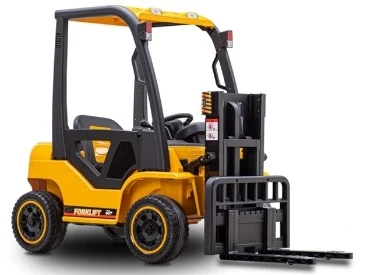
Choose a sealed physical golden sample if you want a defensible bulk comparison; choose a photo pack only if you accept that the second lot is a gamble. For a ride-on toys bulk order of electric cars and SUVs, the sample approval brief is the document that freezes colour, fit, flash and function against a labelled physical unit — and maps which test file covers which market, which lot and which SKU. Get that right and disputes collapse into a measurement; skip it and you renegotiate the same colour argument on every reorder.
This page gives the brief's two procedural pillars, a document coverage map, a worked example built on SKU ROW-353541 (Electric Pickup Ride-On), and an RFQ checklist you can paste into an email. It is written for importers, distributors, retail buyers and private-label sourcing managers, not for end consumers.
Key takeaways
- Approve a physical, sealed and labelled unit. A concept sample, appearance sample, engineering sample, golden sample and production sample serve different approval purposes and must be labelled as such in the brief.
- Record four attributes at approval — colour, fit, flash and function — and compare incoming bulk against the same four on the sealed piece. Buyers who approve only a photo pay for it on the second lot.
- Map every document to three coordinates: market, lot, and the specific file it covers. A type-test or golden-sample report does not automatically cover a later production lot; report SKU, materials, colours and production date or cohort must match the PO.
- Do not merge scopes. UKCA and a VOC file are different papers, and food-contact approval for a polymer does not demonstrate toy-specific mechanical, flammability or chemical compliance.
- A useful RFQ states destination market, age grade, materials and colours, packaging language, requested tests, sample policy, tooling terms and the requested trade term — send it with the brief, not after the sample arrives.
What does a sample approval brief actually contain?
A sample approval brief is a physical-sample plus document-coverage record, not a photo pack. It has two procedural pillars and nothing else: the sealed golden sample that fixes colour, fit, flash and function, and the coverage map that says which paper covers which market, which lot and which file. Everything else — feature lists, packaging artwork, carton marking, trade term — hangs off those two.
That framing matters because ride-on cars and SUVs are assembled products with visible cosmetic surfaces, moulded parts that must fit, and electrical functions that either work on arrival or do not. Each of those failure modes is settled by a different piece of evidence, and a brief that muddles them produces arguments rather than decisions.
Why the sealed golden sample decides the colour argument?
The sealed golden sample is the unit that ends a colour dispute, because the comparison is physical rather than textual. Seal the approved unit, label it with SKU, configuration, approval date and approver, and store it against the bulk lot it authorises. An email thread cannot be measured against; a sealed piece can.
Then compare bulk to that same physical piece on the same four attributes: colour, fit, flash, function. Colour against the sealed surface under agreed light, fit at the parting lines and assembly joints, flash at the mould seams and gate areas, function across drive, steering, remote control, lights and audio. Record what you observed, not a pass/fail verdict you cannot later defend.
One caution that belongs in the brief itself: production-part approval should compare the first released parts with the signed drawing, the golden sample and the applicable safety test sample. Three references, not one.
Which certification and test documents belong in the coverage map?
The coverage map lists each document against market, lot and file scope — and refuses to let one paper stand in for another. A type-test or golden-sample report does not automatically cover a later production lot, so the map must tie report SKU, materials, colours and production date or cohort to the purchase order. A test report is useful only when its identity matches the actual SKU, model, material, colour, age grade and sample construction.
Watch for scope creep between material classes: food-contact approval for a polymer does not demonstrate compliance with toy-specific mechanical, flammability or chemical requirements. And watch for jurisdiction creep — UKCA plus a VOC file on a battery-powered product are different papers, and a buyer trying to use one certificate for both scopes will find that paperwork which does not match the lot is not paperwork.
If you place toys on the Great Britain market, the brief should also capture the identity obligation: manufacturers and importers must provide their name or registered trade name and postal address in the required manner. That is a marking and documentation item, not a test item, and it is frequently missed until the artwork stage.
Where a vehicle-style product includes radio or radar-based driver-assistance features, approval scope can attach to a sub-assembly rather than the whole unit, and design or software changes after approval may trigger requalification. Confirm the target market's framework with your own compliance adviser before you write the requirement into the brief.
Worked example (illustrative, not a real shipment)
Scenario: a buyer consolidates one container of ride-on electric cars and SUVs, roughly 300 units across three configurations, split between two destinations — one EU market and one Southeast Asian market — with different packaging language and different carton marking on the same vehicle. Nothing here describes a real order; it exists to show where a brief docks a lot.
The reference configuration is the Electric Pickup Ride-On, SKU ROW-353541: pickup-truck styling, parent remote control or child drive, music, Bluetooth, lights, a 2.4G remote and a two-point safety belt. The Southeast Asia quote variant carries configuration DLS-X11, 12V, motor 5 x 1390, size 100*62*50 and carton quantity 1; the factory folder for that build is DLS-X11. Those are the facts the brief must carry verbatim, because they are the numbers a factory will build to when nobody is looking.
Where the shipment gets held: the packaging step. Two destinations from one production run means two artwork sets, two language sets and two carton-marking schemes on a single line. If the brief names only one artwork revision and the factory defaults to the higher-volume market, the second destination's cartons fail the buyer's own intake check — not a safety failure, a documentation failure, and still a stopped lot.
What the brief should pin before tooling starts: the sealed sample for ROW-353541 as quoted for the SEA variant, the revision history between the approved sample and the current bulk lot, which features are verified on the sealed sample versus merely stated in the quote, and the exact carton quantity and dimension set that the freight calculation depends on.
What goes in the SKU-level worksheet?
The worksheet is one row per candidate SKU with fields a factory can answer without interpretation: exact SKU, source type, configuration code, voltage and motor specification, product dimensions, carton quantity, destination market, age grade, packaging language, requested tests, sample policy, and trade term. Freeze the row before the sample ships; a field added after approval is a change request, not a note.
For a ride-on assortment, the candidate pool typically spans pickup styling, off-road SUV bodies, sports-car bodies, drift cars and novelty bodies. Prices and MOQs move with configuration, so quote each SKU against its own row rather than against a category average. The brief should record which of the pooled SKUs are genuinely electric cars and SUVs and which are adjacent categories, so the assortment decision is not quietly made by the worksheet's row order.
Sample approval brief: what to check at each step and the red flag
| Step 1 — Label the sample type | Check: the brief names the sample as concept, appearance, engineering, golden or production, and states its purpose. Red flag: one unlabelled unit treated as approval for every purpose. |
|---|---|
| Step 2 — Seal and store the golden sample | Check: the approved unit is sealed, labelled with SKU, configuration, approval date and approver, and stored against the bulk lot. Red flag: approval given in email only, with no physical reference retained. |
| Step 3 — Record the four attributes | Check: colour, fit, flash and function are each written down at approval time. Red flag: the record says 'looks good' with no attribute-level entry. |
| Step 4 — Compare incoming bulk to the sealed piece | Check: the same four attributes are re-checked on bulk against the sealed unit, under agreed light. Red flag: bulk accepted on a photograph supplied by the factory. |
| Step 5 — Build the document coverage map | Check: each document is tied to a market, a lot and the file it covers, with report identity matching SKU, material, colour, age grade and construction. Red flag: a type-test report presented as coverage for a later production lot. |
| Step 6 — Confirm market-specific obligations | Check: the destination's framework is named, and marking obligations such as manufacturer or importer name and postal address are assigned to a document and an artwork revision. Red flag: requirements copied from a different market without confirmation. |
| Step 7 — Freeze the revision and change rule | Check: revision history between the approved sample and the current bulk lot is on file, and design or software changes trigger a requalification step. Red flag: no named owner for change notification. |
| Step 8 — Lock the commercial row | Check: SKU, configuration code, dimensions, carton quantity, packaging language, sample policy and trade term sit in one frozen row per SKU. Red flag: MOQ or specification numbers that appear only in chat. |
What should you ask suppliers before you approve the sample?
Send these questions with the brief, not after the sample lands. They are written so a factory can answer them factually, and so a vague answer is visible as a gap rather than buried in prose.
Does the sealed golden sample on file match the quoted variant exactly — configuration code, voltage, motor specification, product dimensions and carton quantity? Which document covers which market, which lot and which file for this SKU, and can you show the report identity against the SKU, material, colour, age grade and construction? What is the revision history between the approved sample and the current bulk lot, and who notifies us when a design or software change occurs? For each SKU on the worksheet, confirm exact SKU, source type, configuration, carton quantity and packaging language. Which listed features are verified on the sealed sample versus stated only in the quote? And confirm the sample policy, tooling terms, requested tests and trade term in writing.
Two structural questions are worth asking every time. Which of the pooled SKUs are electric cars and SUVs and which are adjacent categories? And if we ship two destinations from one production run, what separates the artwork, language and carton marking on the line?
Sources
Related Products & Categories
Build the brief before the sample ships
Assemble your brief around the two pillars — the sealed golden sample and the document coverage map — then fill one worksheet row per candidate SKU before you request samples. Browse the current electric ride-on line to see which configurations belong on your worksheet, including the pickup and SUV bodies that anchor an assortment.
Send the RFQ checklist with the brief so the factory answers market, age grade, materials and colours, packaging language, requested tests, sample policy, tooling terms and trade term in one pass.