
sourcing / BUYER DESK
How to Record Market Variants for EV Ride-Ons | 2026
Published 2026-10-06 · Updated 2026-10-06
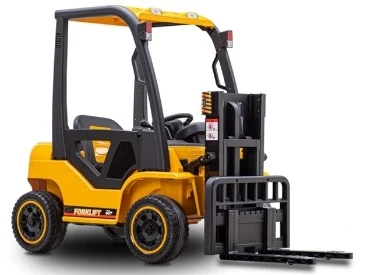
Record market variants for electric cars and SUVs on a SKU-level worksheet when you are ordering to stock a defined market, and use a quote-only log when you are still comparing configurations — the difference is whether a document can be matched to a lot. For ride-on toys bulk order planning, every variant row must carry a market, a lot reference, a covering document, and a flag showing whether the value is a supplier quote or something you have physically observed. Get that wrong and you will be holding a pallet of 12V off-road SUVs with a certificate that covers a different build.
This page gives you the worksheet structure, the fields that must stay blank until verified, and the questions that separate a real specification from a sales line.
Key takeaways for variant recording
- Treat every configuration value as a quote claim until a sample and its revision number are verified against the physical unit — a 12V motor count, a carton quantity of 1, or a 93*61*57 size stated in a message is a claim, not a fact.
- Key the variant row to market + lot + covering document, never to a single certificate. A UKCA file and a VOC file on the same electric product are different papers, and paperwork that does not match the lot is not paperwork.
- Anchor colour, fit, flash and function acceptance to a sealed golden sample held on the QC shelf. Photo approvals fail on the second lot; the sealed piece is what ends the argument.
- Leave AQL and defect-rate cells empty in your worksheet and pull the number from the agreed inspection plan on the PO. A catalogue sentence is not an inspection plan.
- For any electronic variant with a button-cell compartment, record screw closure, tool access and warning status as separate lines before you record toy function.
- A factory's stated capacity is a planning input, not a verified fact, until product type, machine mix, shifts, tooling and recent records are checked.
What fields belong on a market variant row?
A market variant row is one configuration of one SKU sold into one destination, with a paper trail that reaches a specific lot. The row is not the SKU in general — it is the SKU as configured, packed and documented for that market.
Use the market-research segmentation axes as your column backbone, because they are how the broader category is measured. The Business Research Company's electric vehicle report segments by type (BEV, PHEV, FCEV), vehicle type (passenger cars, commercial vehicles), charging type (slow, fast), power output (under 100 kW, 100-250 kW, over 250 kW) and end use. Research and Markets, in a forecast published September 25, 2026, uses a similar set: type, vehicle type, charger, power output and region, with battery electric vehicles at slightly more than 52% of the market, passenger cars at 53%, the 100-250 kW band above 41.8%, and normal chargers at 87.5%. Those shares tell you which attributes carry the most commercial weight and therefore deserve their own column.
Then add the catalog-specific fields your supplier actually quotes: configuration code, voltage, motor specification, product dimensions, carton quantity, factory folder reference, and the market the variant is intended for. A worked example from the current catalog: the Electric Off-Road SUV Ride-On | ROW-353569 is quoted for a Southeast Asia variant under configuration DLS-X19, 12V, motor 5 x 1390, size 93*61*57, carton quantity 1, with the factory folder DLS-X19. Every one of those values is a quote claim until you have seen the sample and its revision.
Add three administrative columns that buyers routinely skip and later regret: quote-vs-observation flag, sample/revision status, and covering document. Without those three, the worksheet is just a price list.
Variant worksheet fields: what to check and what triggers a hold
| Field: Market / destination | Check: destination country named on the row, and the market the quote was prepared for. Red flag: one quote repriced for two markets with no separate document. |
|---|---|
| Field: Configuration code | Check: the code quoted (e.g. DLS-X19) matches the code on the sample label and the PO. Red flag: configuration code appears only in an email, never on a document. |
| Field: Voltage and motor spec | Check: quoted values such as 12V and motor 5 x 1390 match the physical unit and the revision. Red flag: values differ between the quote sheet and the sample tag. |
| Field: Product dimensions | Check: quoted size such as 93*61*57 is restated as a measurement you took yourself. Red flag: dimensions given without a unit convention stated. |
| Field: Carton quantity | Check: carton quantity and inner-pack orientation are standardised so carton weight, protection and barcode handling stay repeatable. Red flag: inner-pack quantity changes between lots without a written change note. |
| Field: Covering document | Check: which file covers which test for this lot, and whether the file matches the lot on the PO. Red flag: one certificate offered for two different products or markets. |
| Field: Quote vs observation | Check: each value tagged as supplier-quoted or buyer-observed. Red flag: a row where every value is a quote and none has been seen. |
| Field: Sample / revision status | Check: revision number of the sample quoted, and whether it is the shipping configuration or a sample configuration. Red flag: no revision number exists. |
| Field: Golden sample reference | Check: a sealed physical piece on the QC shelf governs colour, fit, flash and function. Red flag: acceptance is being run off a photo or an email thread. |
| Field: Inspection plan / AQL | Check: AQL and sampling plan taken from the agreed inspection plan on the PO. Red flag: a defect rate or AQL quoted from a catalogue or a chat message. |
| Field: Battery and charging checks | Check: polarity, charging, thermal, access, retention and abuse checks match the battery type and charger configuration. Red flag: no charger configuration stated alongside the battery type. |
| Field: Button-cell compartment | Check: screw closure, tool access and warning label status recorded as separate lines. Red flag: compartment opens with fingernails, or warning status is unstated. |
| Field: Authorization claims | Check: any retailer or authorization claim is marked 'to be confirmed with documentation'. Red flag: a retailer name used as a selling point with no document attached. |
| Field: Nonconformance record | Check: any NCR states defect, lot, quantity, containment, disposition and responsible decision. Red flag: a pass/fail note with no lot reference. |
How do you separate a quote claim from an observation?
A quote claim is anything the supplier tells you before you have handled the unit. An observation is anything you or your inspector recorded against a physical piece with a revision number. The two never share a cell.
In practice, the anchor SKU record is almost entirely quote claim at the enquiry stage. The Southeast Asia quote variant of ROW-353569 — configuration DLS-X19, 12V, motor 5 x 1390, size 93*61*57, carton quantity 1 — is a quote claim until the sample arrives, the revision number is confirmed, and the shipping configuration is distinguished from the sample configuration. Ask directly whether the quoted configuration is what ships or what was photographed.
The reason this matters on ride-on vehicles rather than on simpler goods: a ride-on has a battery, a charger, a motor set, a remote-control link and a child-accessible compartment. Each of those can change between the sample and the production lot without anyone announcing it. Your worksheet is the only place that change becomes visible before the container closes.
Run the same row structure across the rest of the assortment so the worksheet stays SKU-level rather than turning into prose. The current catalog lists twelve Electric Off-Road SUV Ride-On models, all at a MOQ of 30. Each needs its own variant rows per market — not one shared row because the product name is similar.
One boundary worth stating plainly: wholesale and import channels here are B2B. These are sold to importers, distributors and retailers, not to end consumers, so market-variant records should reflect retail-market requirements rather than consumer-facing copy.
Worked example (illustrative, not a real shipment)
This is an invented scenario to show where a hold happens. It is not a real order and does not describe any actual shipment, factory or buyer.
A buyer places roughly 600 units of an off-road SUV ride-on across two destination markets — one EU market and one UK market — from a single 40-foot-equivalent load, split 400/200. The supplier quotes one configuration and offers one certificate pack. On paper the order is clean.
The hold lands at the document-to-lot step. The pack contains a UKCA file and a separate VOC file. The buyer's worksheet has one 'covering document' cell for the whole load, so the EU-destined 400 units are being matched to a file that was written for a different purpose. Because the row was never split by market and lot, the mismatch only surfaces when the forwarder asks for the destination-specific paperwork.
The second hold is quieter. The carton quantity of 1 is fine, but the inner-pack orientation and separators were never standardised, so the carton weight varies across the pallet and the barcode handling is inconsistent at the DC. Both problems trace to the same missing columns: market, lot, covering document, and an inner-pack line.
The fix is unglamorous. Split the row into two market rows, attach the correct file to each, add an inner-pack orientation field, and re-verify the configuration code and revision against the sealed sample before release.
Which document covers which test for this lot?
Map market, lot, and which file covers which test, then check that the file matches the lot number on the PO. A UKCA document and a VOC file are different papers serving different purposes; a buyer who tries to use one certificate for both is holding paperwork that does not match the lot, and paperwork that does not match the lot is not paperwork.
Retention is part of the record, not an afterthought. Great Britain guidance indicates technical documentation is typically retained for 10 years after each individual product is placed on the market, subject to product-specific rules. Where a digital product passport applies, the economic operator placing the toy on the market must make a back-up copy of the passport through a service provider. Treat digital product passport obligations and market-access documentation as separate regimes with separate timelines — do not merge them into one deadline unless the official text for your product category confirms it.
Supplier records for materials, production, inspection, change control and testing should be retained long enough to support your own market and recall obligations. If a supplier cannot say how long they keep change-control records, that is a worksheet red flag, not a negotiating point.
Where the official text does not confirm an application date for your specific product category, write 'timeline not confirmed from official text' in the row and move on. Do not fill the cell with a date from a secondary article.
Why does the sealed golden sample beat a photo approval?
Because bulk is compared to a physical piece, not to an image. Colour, fit, flash and function are judged against the sealed golden sample on the QC shelf; email approvals do not settle a colour dispute, and buyers who approve only a photo pay for it on the second lot.
Your worksheet should carry the golden sample reference as a field, not as a footnote. When a variant row lists a market and a lot, it should also list which sealed piece governs acceptance for that lot. If the answer is 'the photo in the approval thread', the row is not finished.
For ride-on vehicles specifically, extend the golden-sample comparison to the parts that a photo cannot show: battery polarity, charging behaviour, thermal behaviour, access to the battery compartment, retention, and abuse resistance that matches the battery type and charger configuration. These are function checks, and function is exactly what a photograph fails to capture.
Where a variant includes a button-cell compartment, examine screw closure, tool access and the warning before you discuss the toy's play features at all. A compartment that opens with fingernails should not ship, regardless of how well the variant sells.
What to ask suppliers before you open the PO
Ask these in writing and record the answers in the variant row rather than in a chat thread. Every one of them is designed to produce something you can attach to a lot.
Which document covers which test for this lot, and does the file match the lot number on the PO? What is the revision number of the sample quoted for this market variant, and can you provide the sealed golden sample for colour, fit, flash and function comparison? Is the quoted configuration the shipping configuration or a sample configuration?
For electronic variants: what is the screw closure, tool access and warning label status? What battery type and charger configuration does this variant ship with, and which polarity, charging, thermal, access, retention and abuse checks apply?
What inspection plan and AQL are agreed on the PO for this SKU, and how will a failed lot be isolated, classified and released? What does your nonconformance report contain — defect, lot, quantity, containment, disposition and responsible decision, or only a pass/fail note?
Which retailer or authorization claims can you support with documentation? How long do you retain supplier records for materials, production, inspection, change control and testing? What is the inner-pack quantity, orientation and separator standard for this carton?
Which red flags should stop a variant row from clearing?
A missing covering document. If the row cannot name the file that covers the test for that lot, the row is not verified, no matter how complete the pricing looks.
A configuration that exists only in conversation. If the configuration code, voltage, motor spec and dimensions appear in a message but on no document, treat the whole row as unverified.
Acceptance by photograph. If colour, fit, flash and function are being signed off from an image, expect the second lot to be the expensive one.
A number with no plan behind it. If someone quotes an AQL or a defect rate from a catalogue or a chat, ask for the agreed inspection plan on the PO instead. If there is no plan, there is no number.
One certificate for two products or two markets. That is the paper mismatch that stalls a container at the destination.
A button-cell compartment with no closure or warning line recorded. This is a compartment and warning problem before it is a toy problem.
An authorization claim with no document. Retailer names are marketing until a file is attached.
Sources
Related Products & Categories
Request a Quote
If you are building a variant worksheet for an off-road SUV ride-on assortment for a specific market, send the destination, the configuration you are evaluating, and the documentation you need to see. Ask for the revision number and the sealed golden sample arrangement in the same message — those two answers tell you more about a supplier than the price does.