
sourcing / BUYER DESK
How to Request Current MOQ for Electric Cars & SUVs
Published 2026-10-04 · Updated 2026-10-04
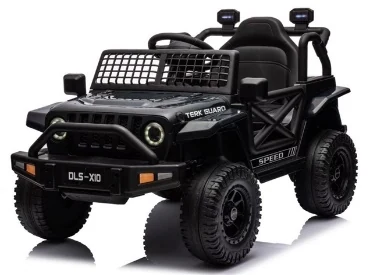
Request current MOQ by sending a structured RFQ, not a one-line question: SKU, configuration or variant, destination market, battery and motor spec, carton quantity, and product size. That single change separates a usable quote from a guess, and it is the difference between a price you can plan around and a number that moves the moment you ask about packaging or a different motor.
For a ride on toys bulk order, the MOQ you get back is only as good as the spec you sent. A drift car quoted in one configuration will not hold the same minimum once you change battery, motor, or destination market.
What buyers should take away before the first email
- Treat every MOQ as configuration-bound. Ask for the current figure against one SKU, one variant, one market, and one battery/motor combination, then ask what each substitution does to the minimum.
- Split the reply into two columns: supplier-stated claims and buyer-observed facts. A quote is a claim; a measured carton, a sealed sample, and a lot-matched document are observations.
- Demand a sealed physical golden sample before bulk sign-off. Colour, fit, flash, and function are compared against that piece, not against an email or a photo.
- Map documents to market, lot, and test scope. A certificate that does not match the lot is not paperwork — it is a delay waiting to happen at the port.
- Get the inspection plan onto the PO. If you want an AQL number, it belongs in the agreed plan, not in a catalogue sentence.
What exactly should a current MOQ request contain?
A current MOQ request should contain seven fields: SKU, configuration or variant code, destination market, battery spec, motor spec, product size, and carton quantity. Anything less and the supplier is guessing on your behalf.
A worked example makes this concrete. Worked example (illustrative, not a real shipment): a buyer asks about an electric drift ride-on car, factory folder X2, configuration DLS-X2, 12V, battery 12V7AH x 1, motor 550 x 2, product size 122*71*62, carton quantity 1, against a Southeast Asia quote variant. Those are the facts on the table. The MOQ and price for that configuration are not published, so the request must ask for them — and must ask what happens to the minimum if the battery moves to a different capacity or the motor changes.
Five items are not in that list and should be asked for separately: master carton CBM, container load figures, lead time, payment terms, and the document list. Carton CBM is derived from the measured outer-carton dimensions and should be recalculated when carton size or pack quantity changes, so ask for it rather than assuming it from the product size.
Why does the same ride-on SUV quote come back with different MOQs?
The same vehicle can carry different MOQs because the minimum tracks the configuration, not the model name. Battery capacity, motor count, wheel type, colour programme, packaging language, and destination market each pull the minimum in a different direction.
This is why broad catalogue entries are a poor basis for a quote. Electric Off-Road SUV Ride-On listings in a catalogue show a minimum of 30 units, and published unit prices across those entries range from about 60 USD to about 179 USD. Treat those as catalogue-level figures for the listed SKUs, not as a quote for your configuration. Your destination market, packaging language, and requested tests can move both the minimum and the price.
Ask the question this way: for SKU [X] in configuration [Y] shipped to [market], what is the current minimum, and which line items change it? Then ask separately what the minimum becomes if you drop to a lower battery capacity or change the motor. If the supplier cannot answer the second question, the first answer is not stable.
How do I separate supplier-stated quote claims from buyer-observed facts?
Write the reply into two columns before you negotiate: supplier-stated claims on one side, buyer-observed facts on the other. Supplier-stated claims include the quoted MOQ, unit price, lead time, battery and motor description, and any statement about testing. Buyer-observed facts include the sealed sample you can hold, the measured carton, the lot number on the documents, and the results of your own inspection.
The two columns fail in different ways. A claim can be true for one configuration and false for yours. An observation can be accurate but cover the wrong lot. Keep them apart and you will spot the gap early — usually in the battery line, because battery specification is where ride-on quotes drift most between the sample and the bulk run.
When a supplier answers only in claims, ask for one observation to anchor the quote: a sealed sample, a measured carton dimension, or a document that names the lot. One anchor is worth more than three paragraphs of reassurance.
Which documents must match the lot before the container ships?
Map every document to three things: destination market, lot, and which test it actually covers. If any of the three is missing, the document does not support the shipment.
A real pattern from the floor: UKCA plus a VOC file on an electric bubble machine are different papers, and a buyer tried to use one certificate for both. The fix is not more paper, it is a mapping table. Paperwork that does not match the lot is not paperwork.
Two limits apply here. First, a factory audit or social-compliance certificate does not certify the safety of a specific plastic toy SKU — it certifies the factory system, not the unit in the carton. Second, market-specific requirements must be checked by product type. According to the ACCC, Australia's current mandatory-standard catalogue has to be checked by product type, and a general toy statement does not replace the specific mandatory standard; AS/NZS ISO 8124 is commonly referenced, but the current ACCC list is what you confirm before citing. Manufacturers and importers placing toys on the Great Britain market must provide their name or registered trade name and postal address in the required manner.
Electrical ride-ons add another layer: LED and light-up toys need battery, thermal, accessible-component, electrical, and optical-safety review matched to the light source and age grade. That review is a scope question for your supplier, not a checkbox.
Where does a shipment actually get held?
Worked example (illustrative, not a real shipment): a buyer orders 300 units of one drift car configuration for two destinations, with different packaging language per destination, sharing one production lot. The supplier quotes a single MOQ against the base configuration. At the loading step, the buyer discovers the documents name the base lot while the second destination's packaging was produced on a later run, and the carton CBM was calculated on the original pack quantity.
The hold happens at the document-to-lot check, not at the factory gate. Two destinations from one lot means two document sets; if the packaging change created a second production run, the paperwork has to follow it. Recalculate carton CBM whenever carton size or pack quantity changes, because the container plan built on the first measurement will not fit the second.
Split the PO by lot and destination before production, not after the cartons are sealed.
How should mixed-container buyers request MOQ on filler SKUs?
Mixed-container buyers should ask for MOQ by CBM contribution, not by unit count alone. A high-turnover filler that completes a 20GP or 40HQ alongside another category is a different commercial request from a full-container order, and suppliers quote it differently.
One documented case: a mixed-container importer in Lima bringing 20GP/40HQ loads needed high-turnover filler to complete CBM alongside outdoor goods, and generic unbranded filler complicated his storytelling to Peruvian retailers. The fix was to specify the filler SKU, the branding position, and the target CBM gap in the RFQ — not to ask for "something cheap to fill the box".
If you are building an assortment, quote the filler request alongside the adjacent ride-on categories you already buy. Ask for the MOQ at the assortment level and the CBM at the carton level; they are two different numbers.
What belongs in the agreed inspection plan on the PO?
The defect threshold belongs in the agreed inspection plan on the purchase order, not in a catalogue sentence. No AQL number is published here, and none should be taken from a blog.
On the floor the process is still concrete: a failed lot is isolated, the defect class is recorded, and the lot is released only after rework. Buyers who want a number get it from the inspection plan agreed on the PO. That plan should also state which measurement equipment is used for release decisions and whether it has a current calibration or verification status — an uncalibrated gauge is not a release decision.
Before you sign the PO, confirm the plan names the defect classes, the sampling basis, the release authority, and what happens to a failed lot. If any of those are blank, the plan is not finished.
Step | What to check | Red flag
| 1. Build the RFQ | SKU, configuration/variant, destination market, battery spec, motor spec, size, carton quantity | A reply that quotes a model name without a variant code |
|---|---|
| 2. Ask the MOQ against one configuration | Current minimum for that exact variant, plus what each substitution does to it | A single number offered as valid for every battery, motor, and market |
| 3. Separate claims from observations | Quote claims in one column, sealed sample / measured carton / lot documents in the other | Only claims, no anchor observation |
| 4. Lock the sealed golden sample | Colour, fit, flash, function compared against the sealed piece | Approval given on a photo or an email thread |
| 5. Map documents to market + lot + test scope | Each file names the market, the lot, and the test it covers | One certificate offered for two different papers or two destinations |
| 6. Confirm carton CBM and container fit | Measured outer-carton dimensions and pack quantity, recalculated after any change | CBM carried over from an earlier carton or pack size |
| 7. Put the inspection plan on the PO | Defect classes, sampling basis, release authority, failed-lot handling, equipment calibration status | Defect threshold quoted from a catalogue or a blog |
| 8. Confirm channel before retail terms | Whether the supplier sells to end consumers or is B2B/wholesale only | Retail pricing discussed before the trade channel is confirmed |
What to ask suppliers (RFQ checklist)
Send these as a numbered list and ask for written answers. A useful toy RFQ states destination market, age grade, materials and colors, packaging language, requested tests, sample policy, tooling terms, and the requested trade term.
1. What is the current MOQ for this SKU in configuration [variant], and does it change for [destination market]? 2. Is the quoted price tied to the stated battery and motor, or can those be substituted — and how does each substitution move the MOQ? 3. Carton quantity is listed as [X]; what is the master carton CBM, and how many units fill a 20GP and a 40HQ? 4. Which documents cover this SKU for my destination market, and which lot does each document reference? 5. Can you provide a sealed golden sample for colour, fit, flash, and function, and will bulk be compared against that piece? 6. What is the agreed inspection plan on the PO, and which defect classes trigger lot isolation and rework before release? 7. Do you sell to end consumers, or is this B2B/wholesale only for importers, distributors, and retailers? 8. For a mixed container, which high-turnover filler SKUs do you recommend to complete CBM alongside my other categories?
Two answers should stop the conversation until they are resolved: a MOQ offered without a variant code, and any document that does not name its lot.
What is still unknown until the supplier answers
Several things cannot be resolved from a catalogue entry and must come back in writing: the MOQ and price for a specific configuration, master carton CBM and container load, lead time, payment terms, the document list and its lot mapping, and the golden sample record including revision history and approval status.
Catalogue-level attributes for the wider off-road SUV range are not all in evidence, so do not build a purchase decision on a listing line alone. Ask, in writing, for the configuration-level facts, then cross-check them against a sealed sample and a measured carton before the PO is signed.
Sources
Related Products & Categories
Ready to send a request that gets a usable answer?
Take the eight-question checklist, fill in your SKU, variant, market, battery and motor spec, and send it as a numbered list. Ask for the MOQ against one configuration, a sealed sample, and a lot-matched document set in the same reply. That is the shortest path from a vague minimum to a number you can build a container plan around.