
sourcing / BUYER DESK
RFQ for Electric Ride-On Cars & SUVs: What to Specify
Published 2026-10-08 · Updated 2026-10-08
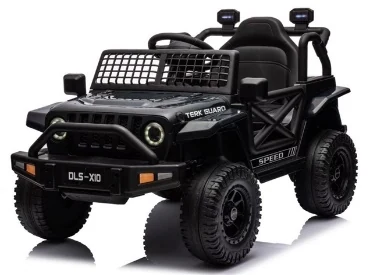
Write the RFQ around one named SKU and one named factory folder, not a product category — that single habit prevents most quote disputes on electric ride-on cars and SUVs. A workable bulk order RFQ for ride-on toys states, in writing: the SKU and factory folder code, the configuration exactly as quoted (voltage, battery, motor, dimensions, carton quantity), the destination market and its quote variant, the sample and golden-sample rule, tooling terms if a fee is paid, the full Incoterms version plus named place, and which document covers which market, lot and test. Everything the factory says before you have a sealed sample is a claim, not a specification — label it that way in the document itself.
This page is a working template, not a brochure. It walks through the fields a ride-on importer, distributor, retail buyer or private-label sourcing manager should freeze before a PO is issued, using a single electric excavator ride-on as the worked example and a mixed-container scenario to show where a shipment actually gets held up.
What a strong ride-on RFQ must contain
- Name the SKU and the factory folder on line one. "Electric ride-on SUV, 24V" is not a source identity; a SKU plus factory folder code is. Ambiguity here is what later becomes a colour, battery or motor dispute.
- Split the document into two columns — supplier-stated and buyer-observed. Quote data (voltage, battery, motor, carton quantity) belongs in the first column and stays unverified until a sample is torn down and measured.
- Seal a physical golden sample with a date and ID before bulk starts. Bulk is compared to that sealed piece on colour, fit, flash and function; a photo approval does not survive a second lot.
- Write Incoterms as version plus named place — FOB Shantou or FOB Shenzhen as actually booked. "FOB" alone is where freight arguments start, and they outlast production.
- Map every document to a market, a lot and a test. A type-test or golden-sample report does not automatically cover a later production run; if the paper does not match the PO's SKU, materials, colours and production cohort, it is not paperwork for that shipment.
- If you pay a tooling fee, the same document must state the fee, who owns the tool, the storage period and what happens if the tool sits idle. Tooling policy is a document, not a handshake.
Why does the RFQ have to start with a SKU and a factory folder?
Because the same ride-on body can be sold under several configurations, and only the SKU plus factory folder pins the quote to one physical build. In the worked example below, the company SKU is ROW-353527 and the factory folder is DLS-X7 — a ride-on excavator. The product type (construction-themed ride-on) tells you what the buyer sees on a shelf; the folder tells the factory which line, mould and BOM the quote refers to. If your RFQ only says "ride-on excavator, electric", you have given the supplier room to quote one build and ship a cheaper sibling.
Practical rule: every RFQ line opens with SKU, factory folder, product type, then the commercial block. The same structure works across the wider electric ride-on range — cars, pickups, tractors, fire trucks, forklifts — because it forces the supplier to name the exact build before naming a price.
How do you separate a quoted configuration from a verified one?
Put the quoted configuration in the document under an explicit "quote claim — pending sample verification" label, with a matching observation column left blank for your own sample findings. For ROW-353527 / DLS-X7, the supplier's quoted configuration reads: 24V system, 24V10AH × 1 battery, 775 × 2 motor, product size 130 × 58 × 83, carton quantity 1, with separate Europe and US quote variants. That is what the quote says. It is not yet what the carton will contain.
The observation column is where you record what the sample actually shows: battery label and capacity as received, motor markings, measured dimensions, carton count and packaging language. Two columns, one page. When a bulk lot disagrees with the quote, you are not arguing about memory — you are pointing at a blank field that was supposed to be filled at sample stage.
When should the golden sample be sealed, and what does it settle?
Seal it before bulk production starts, label it with a date and an ID, and keep it on the QC shelf — not in a drawer, not as a photo in an email thread. The sealed piece is the reference for colour, fit, flash and function on every subsequent lot. Buyers who approve only a photo pay for it on the second lot; the shade moves, the trim fits differently, the flashing shows up where the photo never did.
Your RFQ should therefore include a line asking the supplier to confirm they will seal the golden sample and hold it for bulk comparison, and to state what happens if the sealed piece is lost or damaged. It sounds bureaucratic until the first colour dispute, at which point it is the only argument that ends.
Note the distinction that trips people up: a golden sample is a physical reference, and a type-test or golden-sample report does not automatically cover a later production lot. Match any report to the SKU, materials, colours and production date or cohort on the PO.
What belongs in the tooling clause?
If money changes hands for a mould, the RFQ must freeze four things: the fee, who owns the tool after payment, the storage period, and the outcome if the tool sits idle. Without those clauses, paying a fee does not clearly establish ownership or release conditions.
Write it plainly: fee amount and currency, ownership on payment, storage period in months, and what happens if the tool is idle beyond that period — who moves it, who pays, who can retrieve it. Tooling language is not a legal flourish; it is the difference between owning a mould and renting access to one.
Which Incoterms wording stops freight disputes?
The version plus the named place, written as booked: FOB Shantou or FOB Shenzhen, for example. "FOB" alone has started freight arguments that lasted longer than production itself. The named place decides who books what, and the version number (Incoterms 2020, for instance) decides which rulebook both sides are reading.
For ride-on vehicles this matters more than for small toys. Cartons are bulky, container fill is a real cost line, and the difference between one named port and another changes the landed cost. State the trade term in the RFQ header, before the SKU table, so no line item can quietly carry its own interpretation.
How do you map documents to market, lot and test?
Build a small table in the RFQ with three columns: market, lot, and which document covers which test. Papers are not interchangeable. A UKCA marking file and a VOC file are different documents answering different questions, and one certificate cannot cover both. Paperwork that does not match the lot is not paperwork.
Two rules keep this clean. First, according to the UK toy-market rules, manufacturers and importers placing toys on the Great Britain market must provide their name or registered trade name and postal address in the required manner — so the RFQ should ask who appears on the label for each destination. Second, if one SKU is produced across factories or lots, the split should be visible in the order, carton code and compliance evidence. Ask the supplier to show that split rather than assume it.
What MOQ should an electric ride-on RFQ expect?
Do not treat any single number as an industry standard. Moulded-toy MOQ is a factory- and SKU-specific commercial term shaped by resin, mould, decoration, packaging and production quantity; it should not be published as one universal industry fact. Within the electric ride-on range, listed MOQs sit at 30 units per SKU in the current catalog, and that is the figure to test against your own container plan rather than a rule you can carry to every supplier.
The useful RFQ question is not "what is your MOQ" but "what is the MOQ for this SKU, in this configuration, with this packaging, and does it change if I mix SKUs in one container". Mixed-SKU containers are how many importers actually hit volume — a 20GP or 40HQ load completed with high-turnover filler alongside other goods. Generic unbranded filler complicates the storytelling you take to retailers; a named, specified ride-on SKU does not.
Worked example (illustrative, not a real shipment)
An importer is filling one 40HQ with outdoor goods and needs ride-on units to complete the CBM. The RFQ lists one SKU — a ride-on excavator, ROW-353527, factory folder DLS-X7 — at roughly 120 units, split across two destinations with different packaging requirements: one market needs its own carton language and label identity, the other accepts the standard export carton. The quote comes back with two variants, Europe and US.
Two failure points appear in this scenario. First, the packaging split: if the RFQ does not state which units carry which carton language, the factory ships one carton type and the destination that needed its own language is now non-compliant at retail — that shipment gets held. Second, the document map: if the compliance file is issued against the production cohort rather than the SKU and materials on the PO, the paper does not match the lot, and the whole container stalls at the same gate as the packaging problem.
The fix fits on one RFQ page: SKU and folder, quoted configuration, two destination-specific packaging lines, and a document map with a row per market. Approve a sealed golden sample before the line runs, and both failure points become checkboxes instead of incidents.
Step | What to check | Red flag
| 1. Source identity — SKU + factory folder | SKU (e.g. ROW-353527), factory folder (e.g. DLS-X7) and product type are stated on every line | Quote references a category ("ride-on excavator") with no SKU or folder code |
|---|---|
| 2. Quoted configuration | Voltage, battery, motor, product size and carton quantity are written exactly as quoted and labelled pending sample verification | Configuration given verbally, or figures that shift between the quote and the proforma |
| 3. Destination variants | Each market's quote variant and packaging language is named separately | One price and one carton assumed to serve two different markets |
| 4. Golden sample | Supplier confirms a sealed, dated, ID-labelled sample held for bulk comparison on colour, fit, flash and function | Approval by photo or email only; no physical sealed piece |
| 5. Tooling terms | Fee, ownership on payment, storage period and idle-tool outcome are all written | Fee paid with no ownership or release clause in the document |
| 6. Trade term | Incoterms version plus named place, as actually booked | "FOB" with no place, or a place that changes after the quote |
| 7. Document map | Each document mapped to market, lot and test; split across factories or lots visible in the order and carton code | One certificate assumed to cover two markets; paper that does not match the PO's SKU and cohort |
| 8. MOQ and container fill | MOQ confirmed per SKU, per configuration, and under mixed-SKU loading | A single MOQ number quoted as if it applied to every SKU and packaging option |
What to ask suppliers before you sign the RFQ
Send these as written questions, and require written answers. Verbal confirmations do not survive a change of account manager.
Ask the supplier to confirm the quoted configuration against the actual production BOM — for ROW-353527 / DLS-X7 that means 24V, 24V10AH × 1, 775 × 2, 130 × 58 × 83, carton quantity 1. Ask which parts differ between the Europe and US quote variants, specifically. Ask whether they will seal a golden sample and hold it on the QC shelf for bulk comparison. Ask, if a tooling fee applies, for the fee, ownership, storage period and idle-tool outcome. Ask for the exact Incoterms version and named place as booked. Ask which document covers which market, lot and test, and for the file list mapped accordingly. Ask whether they sell to end consumers or B2B/wholesale only — a supplier also selling direct can undercut your retail channel. And ask for the SKU-level configuration and quote variants of the rest of the range you are considering, not just the first SKU.
The reusable worksheet, per SKU
Keep one row per SKU and reuse it for every electric ride-on you quote: SKU, factory folder, product type, quoted configuration (voltage, battery, motor), product dimensions, carton quantity, destination market variants, packaging language, sample status, tooling status, document map, trade term and MOQ. The columns you leave blank at RFQ stage are the ones you fill at sample stage.
Bring that same sheet to the sample review and to the pre-shipment inspection. When the sealed golden sample sits on the QC shelf next to the bulk cartons and the same page is open on the desk, the conversation stops being about what was promised and starts being about what is in the box.
Sources
Related Products & Categories
Put the worksheet to work
If you are building an electric ride-on assortment and want to test this RFQ structure against real SKU data, start from the [Electric Cars & SUVs](/collections/electric-cars-suvs/) range, or pull the adjacent [Drift, Go-Kart & Racing Rides](/collections/drift-go-karts/) lines if your container needs higher-turnover filler. Send your worksheet — SKU, folder, configuration, destination markets, packaging language — and request a quote against it rather than against a category.