
ranking / BUYER DESK
Sample vs Carton Approval for Ride-On Wholesale
Published 2026-10-15 · Updated 2026-10-15
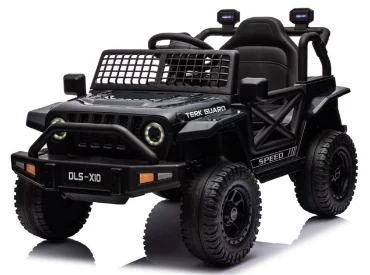
Treat sample approval and carton approval as two independent written gates for any electric ride on toys wholesale program: approve the sample against the recorded product identity, then approve the carton against the recorded packing, size and weight — never one signature covering both. The catalog snapshot behind this page records, for both named SKUs, packing "Carton", reference MOQ 30 and units/carton 1, while recording material as "not recorded" and leaving sample status, current quote, age evidence and destination documents open. The product record is partly confirmed; the commercial and safety record is not. Your approval document has to say which is which.
This page covers what each gate can actually verify, which files to request when a field is missing, and how to keep the two gates from collapsing into a single rubber stamp.
Tests to request
| Sample sign-off sheet | Covers: physical unit identity, packing, units per carton, measured size and weight against the catalog record. Does not prove: performance, battery, motor, age grading, material grade. Ask if missing: a written sample checklist that lists confirmed vs unknown cells. |
|---|---|
| Material specification / TDS | Covers: declared plastic or metal grade and its mechanical properties. Does not prove: that the production unit matches the sample, or that the grade suits the destination market. Ask if missing: TDS — the snapshot records material as "not recorded" for ROW-353518 and ROW-353496. |
| Battery, charger and voltage documentation | Covers: battery type, voltage, charger specification and charge behaviour. Does not prove: run time, speed, load capacity, or any age grading. Ask if missing: the battery and charger data sheet plus the test method behind any performance range. |
| Age grading evidence | Covers: the age band the product is intended for, and the basis for it. Does not prove: certification, licensing, or infant suitability. Ask if missing: which document sets the age band — the catalog record does not carry one. |
| Safety test report (e.g. ASTM F963 / EN 71 file) | Covers: whether a test has been performed, on which unit, by which lab. Does not prove: that your specific production lot is compliant. Ask if missing: the report reference and the tested model; if none exists, record it as open. |
| Carton specification and transit test | Covers: carton board grade, burst or stacking data, drop-test result. Does not prove: that printed artwork, barcode or destination labels are correct. Ask if missing: the board grade and test method; if absent, approve on measured dimensions and weight only. |
| Artwork, barcode and label proof | Covers: printed content, barcode, destination labelling. Does not prove: dimensions, weight, or structural strength of the carton. Ask if missing: a separate artwork proof sign-off line. |
| Current quote and reference price reconfirmation | Covers: the price you will actually be invoiced. Does not prove: MOQ, lead time, or that the price holds beyond its validity. Ask if missing: a current quote — snapshot reference prices are reference values only. |
What does a certificate actually cover for a ride-on toy?
Certification is a single question here, not a theme: ask for the test report reference and the exact model it covers, and if the supplier cannot name either, write "no report on file" in your approval record rather than leaving the cell blank. A catalog entry is not a certificate, and a certificate is not a lot-specific compliance statement — the two are different documents with different jobs.
What sample approval can and cannot verify for ROW-353518 and ROW-353496
Sample approval is a physical-unit check against the catalog record — nothing more. For ROW-353518 the snapshot records packing "Carton", reference MOQ 30, units/carton 1, source size 113*56*35, G.W. 14.8 kg / N.W. 12.6 kg and a reference price of 81.8643 USD, with material "not recorded". For the forklift unit, packing "Carton", reference MOQ 30, units/carton 1, source size 146*63*101, G.W. 27.2 kg / N.W. 24.0 kg and a reference price of 109.346 USD, again with material "not recorded". Those are the only product facts you can hold a sample against.
Because material is not recorded, the sample cannot be checked against a declared material spec. Do not accept a verbal material description at this stage. Ask for the material specification in writing and, where the supplier cites a plastic grade, request the TDS row naming the grade and its mechanical properties. If no TDS exists, record that as an unresolved gap instead of filling it with an assumed value.
The snapshot carries no battery type, voltage, charger specification, motor rating or age grading for either unit. Build the sample approval as a two-column document: confirmed cells (identity, packing, units per carton, size, weight) on one side, unknown cells on the other. A signed sample approval that omits the unknown column is a false record — it implies the sample was verified against a full specification when no such specification exists.
If the supplier offers performance figures — run time, speed, load capacity, charge time — ask for the test method and the measured result, not a range. A range without a report is an unverified claim, and it should not migrate from a chat message into your approval document as a specification.
How to verify the carton record before you release bulk
Carton approval is a separate gate because the snapshot records carton-level fields that say nothing about product performance. The recorded source sizes are 113*56*35 for ROW-353518 and 146*63*101 for ROW-353496, with G.W./N.W. of 14.8/12.6 kg and 27.2/24.0 kg respectively. The snapshot does not state whether those are carton outer measurements or product measurements. Resolve that first: get the supplier to confirm in writing whether the sizes are carton outer dimensions and whether the weights are carton gross/net.
Once the measurement basis is confirmed, check the physical carton with a tape measure and a scale — not against a photo. Write the measured values onto the approval document. If the measured carton differs from the snapshot, the measured carton becomes the baseline and the difference needs an explanation before release.
Carton board grade, burst strength, stacking strength and drop-test results are all unrecorded. Ask for the board grade and, where a transit test is claimed, the test method and result. Without test data you can still approve on measured dimensions and weight, but the document should state plainly that structural performance is unverified and that the buyer either accepts that risk or requires a pre-shipment drop test.
Artwork, barcode and label content are also unrecorded. Keep the printed-content proof as a separate sign-off line. A carton approval covering dimensions and weight should never be read as approval of what is printed on the box.
Sample-to-mass risk when the sample is not production-representative
The snapshot does not say whether a sample would be a production unit or a pre-production build — that unknown is the core sample-to-mass risk. A pre-production sample can pass on fit and finish while the mass run drifts on material, colour, motor or battery. Before you release bulk, ask the supplier to state in writing whether the approved sample is production-representative, and if it is not, which components are expected to change.
The two named units also carry different physical envelopes at the same reference MOQ 30 and units/carton 1 — 113*56*35 against 146*63*101 — so carton and handling risk differ per SKU. Do not assume one SKU's approval transfers to the other, and do not assume they share a carton design. Ask separately whether each unit uses its own carton and how a combined shipment would be palletised.
For a wider program, the same two-gate discipline applies across the range — an Electric Forklift Ride-On, a go-kart, or anything in the electric cars and SUVs collection should each carry its own sample and carton record. One approval signature per SKU, with the unknown cells listed, is what makes the record usable if a dispute arises later.
Sources
Related Products & Categories
Build the approval record before you build the order
Two gates, two documents, one list of unknown cells. If you are assembling an electric ride-on program and want to start from a documented catalog record rather than a verbal spec, the electric cars and SUVs range is the place to shortlist from — then put the sample and carton checklists to work on each SKU you select.