
review / BUYER DESK
Spec a Drift, Go-Kart or Racing Ride-On SKU: Distributor Cost & MOQ Check
Published 2026-09-29 · Updated 2026-09-30
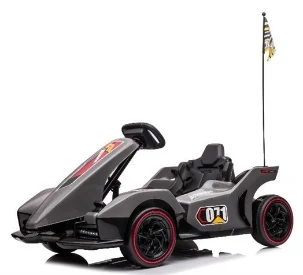
Pick your assortment by FOB band first, not by looks. In the current catalog, every drift, go-kart and racing ride-on SKU carries MOQ 30 — so the real decision is not whether you can hit a minimum, it is which price band and configuration you can defend at retail. The go-kart entries sit at the low end (one at 36.5641 USD, another at 91.713 USD), while the off-road SUV variants span roughly 71.33 USD to 169.63 USD, with the ROW-353563 Electric Off-Road SUV Ride-On quoted at 116.427 USD in a 12V configuration (DLS-X17, 12V7AH x 1 battery, 390 x 4 motor, 125*77*79 cm, carton quantity 1).
Treat that spread as your worksheet: one anchor SKU with a frozen quote variant, a low-price kart to open the assortment, and a top-band model to carry margin. Everything else — sample seals, tooling ownership, Incoterms with a named place, certificate-to-lot matching — is what you verify before the deposit leaves.
Key Takeaways
- MOQ is not the constraint here: all twelve catalog SKUs sit at MOQ 30, so assortment decisions should be driven by FOB band and configuration depth, not by minimum order risk.
- The 36.5641 USD go-kart (ROW-353607) and the 169.63 USD off-road SUV (ROW-353556) are roughly 4.6x apart on FOB — those two cannot share the same retail shelf story, so plan them as separate price tiers.
- ROW-353563 is the only SKU with a documented quote variant (DLS-X17, 12V, 12V7AH x 1, 390 x 4, 125*77*79, carton qty 1). Use it as your reference row and demand the same configuration sheet for every sibling SKU before comparing quotes.
- Send a written tooling clause covering fee, ownership, storage period and what happens to idle tooling — a verbal agreement on who owns the mould does not survive a supplier change.
- A factory audit or social-compliance certificate does not certify the safety of a specific plastic ride-on SKU; match certificates to the market and the lot, and confirm the current mandatory-standard list for your destination by product type.
Picks at a Glance: Cost, Configuration and Stocking Fit
| ROW-353607 — Electric Go-Kart Ride-On | 36.5641 USD | MOQ 30 | Best for opening price point | Entry tier: the cheapest seat in the catalog and the SKU that gets you a kart on shelf under a low retail ceiling. Ask for the configuration sheet before you commit — no quote variant is published for this one. |
|---|---|
| ROW-353598 — Electric Off-Road SUV Ride-On | 71.3315 USD | MOQ 30 | Best for mid-tier volume | Volume tier: sits between the entry kart and the premium SUVs, so it can absorb promotional pricing without gutting margin. Confirm battery and motor spec per unit. |
| ROW-353603 — Electric Go-Kart Ride-On | 91.713 USD | MOQ 30 | Best for kart-positioned mid tier | Kart tier: priced close to the entry off-road SUVs. Useful if your market reads karts as a distinct category rather than a cheaper ride-on. |
| ROW-353563 — Electric Off-Road SUV Ride-On | 116.427 USD | MOQ 30 | Best for the reference configuration row | Anchor tier: the only SKU with a frozen quote variant — DLS-X17, 12V, 12V7AH x 1 battery, 390 x 4 motor, 125*77*79 cm, carton quantity 1, factory folder DLS-X17. Compare every other quote against this sheet. |
| ROW-353594 / ROW-353596 / ROW-353601 / ROW-353552 / ROW-353551 / ROW-353555 / ROW-353558 / ROW-353556 | 117.571 / 123.94 / 124.652 / 149.284 / 144.33 / 154.415 / 131.367 / 169.63 USD | MOQ 30 | Best for premium tier and assortment width | Premium band: a wide spread of off-road SUV variants. Choose by how much configuration depth your retail partner can justify, not by picking the most expensive unit. |
Why does the FOB spread matter more than the MOQ in this category?
Because MOQ is flat at 30 across all twelve SKUs, the only variable that changes your landed-cost math is the FOB price band. That means your assortment decision is really a pricing-tier decision: how many retail price points you can support, and what configuration story sits behind each one.
A 36.5641 USD kart and a 169.63 USD off-road SUV will not live in the same aisle. The cheap unit buys trial purchases; the expensive unit buys basket value from a buyer who already trusts the category. If you stock three tiers, you want at least one SKU close to each end and one in the middle — not four units clustered inside a 20 USD band.
One caution: the catalog prices are quote-level figures, not landed cost. Freight, duty, and the named place in your Incoterms all move the number after FOB. Write the Incoterms version and the named place — Shantou or Shenzhen as actually booked — into the PO, because an FOB without a named place turns into a freight argument that outlasts production.
Which configuration questions should go into the RFQ for each SKU?
Ask for the same configuration sheet you already have for ROW-353563, line by line, for every SKU you are considering. That sheet names the variant code (DLS-X17), the voltage (12V), the battery count (12V7AH x 1), the motor quantity (390 x 4), the assembled size (125*77*79 cm) and the carton quantity (1). If a supplier cannot fill that template for a sibling SKU, you are comparing marketing copy, not product.
Then ask what changes at the container level. Carton quantity of 1 per unit is a real CBM decision — it affects how many units fit a 20GP or 40HQ and whether you can mix ride-ons with your existing outdoor goods to complete a load. Mixed-container importers routinely use high-turnover filler to close out CBM; ride-ons are heavy and bulky, so they usually anchor the load rather than fill gaps in it.
Finally, ask what the quote does not include. Battery type, charger, remote control, seat, harness, wheel material and packing method are the usual silent variables. Any of them can justify a price difference between two SKUs — or hide one.
How do you verify the sample and freeze the revision before production?
Approve a sealed physical golden sample, not a photo. The argument that ends a colour dispute on the QC shelf is the sealed reference piece — bulk gets compared against it for colour, fit, flash and function. Buyers who approve only a photo pay for it on the second lot, when the pigment drifts and the fit changes.
Seal it properly: sign and date the sample, record the variant code, and keep one copy with the factory and one with you or your agent. Then write down the revision rule — what happens if the factory changes a mould, a supplier or a component after approval. A sample that is not tied to a revision number is a souvenir.
If you are paying for tooling, put the terms in the contract before the money moves: the fee, who owns the tool, how many years it can be stored, and what happens if it sits idle. That clause is a document, not a handshake, and it is the difference between owning a mould and renting access to one.
Which documents have to match the SKU, the market and the lot?
Match paper to product and destination. A UKCA file and a VOC report are different documents serving different purposes — a buyer who tries to use one certificate for both ends up holding paperwork that does not cover the shipment. Map the market, the lot, and which file covers which test before you book production.
For go-karts specifically, know the category boundary. The CPSC describes a fun-kart as a motorized four-wheeled vehicle for private off-road recreational use, with defined speeds over 12 mph and up to 40 mph, and notes there is no mandatory CPSC standard for fun-karts; ASTM F2011 is the voluntary industry best-practice standard. Straddle-seated vehicles are excluded from that definition. If your SKU is a sit-in ride-on rather than a fun-kart, do not accept a fun-kart certificate as cover.
In Australia and New Zealand, toy safety commonly references AS/NZS ISO 8124, and mandatory standards can apply to specific toy types — check the current ACCC list by product type rather than relying on a general toy statement. Also confirm that the measurement equipment behind any release decision has a current calibration or verification status, and remember that a factory audit or social-compliance certificate says nothing about the safety of a specific plastic ride-on SKU.
How should a distributor build the final assortment mix?
Work backwards from retail price points, not from the catalog. Decide how many tiers you can sell — typically a trial price, a core price and a premium price — then assign one or two SKUs to each. With MOQ 30 per SKU and twelve models available across roughly 36.56 USD to 169.63 USD, you can build a three-tier program without stretching your working capital on any single model.
Then stress-test the mix on restock. A SKU that sells is only useful if the second lot matches the first, which is why the sealed sample and the revision clause matter more than the opening price. Keep at least one go-kart and one off-road SUV in the plan: they read as different categories to shoppers and protect you if one format underperforms in your market.
If you are filling containers alongside other categories, treat the ride-ons as the anchor and use lighter, faster-turning goods to close the CBM. That is the same logic mixed-container importers use when they need filler to complete a load without over-ordering the slow movers.
Where are ride-on toys and this kind of plastic assortment usually produced?
Injection-moulded plastic ride-ons of this type are typically produced in Chenghai, the Shantou-area cluster in Guangdong known for moulded plastic toys. Wooden toys cluster in Yunhe, plush in Yangzhou, and general merchandise in Yiwu — useful shorthand when you are deciding which sourcing trip is worth a flight.
That geography matters for two practical reasons. First, moulded plastic ride-ons share a supply base with other large injection-moulded toys, so tooling, pigment and QC practices travel between categories. Second, colour consistency is a cluster-wide discipline problem, not a single-factory flaw — which is exactly why the sealed golden sample is the working QC tool rather than a nice-to-have.
Use Case vs Material to Ask About vs Test to Request
| Entry-level kart for a trial price point | Material to ask: wheel and tyre compound, seat plastic grade, metal frame coating. Test to request: stability and tip-over assessment, plus a functional check of steering and throttle return. |
|---|---|
| 12V off-road SUV for a core price tier | Material to ask: battery type and count, motor quantity per unit, UV-stabilised pigment for outdoor display. Test to request: battery and charger documentation matched to your destination market, plus colour comparison against the sealed sample. |
| Premium off-road SUV for top-tier retail | Material to ask: full configuration sheet (variant code, voltage, battery, motor, carton quantity), plus seat, harness and wheel upgrades. Test to request: lot-matched safety documentation for the destination market and a carton drop check. |
| Mixed container with outdoor goods | Material to ask: carton dimensions and quantity per unit, palletisation, and whether the master carton survives double stacking. Test to request: a container loading plan and a carton compression check. |
| Private-label or custom-colour program | Material to ask: tooling ownership and storage terms, minimum colour-run quantity, mould revision control. Test to request: a sealed golden sample per colour plus a written revision-change procedure. |
How we picked
We used only the SKUs in the current catalog, ranking them by FOB band and configuration depth rather than by any claimed performance. The twelve models all carry MOQ 30, so the differentiator had to be price position and how much is actually documented about the unit.
ROW-353563 earned the anchor slot because it is the only SKU with a published quote variant — DLS-X17, 12V, 12V7AH x 1, 390 x 4, 125*77*79 cm, carton quantity 1. The eleven sibling SKUs are positioned by name, MOQ and price only; we did not invent specifications for them.
The verification layer — sealed golden sample, written tooling terms, Incoterms with a named place, certificate-to-lot matching — comes from first-hand sourcing practice, and the category boundary for fun-karts comes from the CPSC description and the voluntary ASTM F2011 standard. No speed, range, load, or certification claim is made for any SKU here; those must be confirmed per model, per market, per lot.
Sources
Related Products & Categories
Request a Quote
Send us the SKUs you are shortlisting and the destination market, and we will return a configuration sheet per model plus a quote with a named place. If you want to start with the reference row, ask for the ROW-353563 sheet and compare every other model against it.
Browse the full [Drift, Go-Kart & Racing Rides](/collections/drift-go-karts/) range and the [Construction & Specialty Rides](/collections/construction-specialty-rides/) collection before you finalise the mix.