
review / BUYER DESK
Which Electric Car & SUV SKU to Stock: Distributor Checklist
Published 2026-09-29 · Updated 2026-09-30
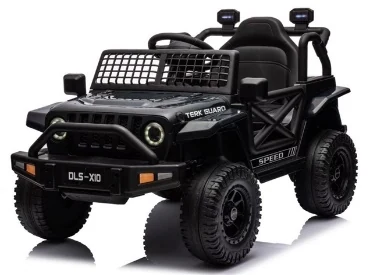
A regional distributor sends an RFQ for 30 units of an off-road ride-on, gets back a quote with a configuration code, a battery figure and a carton size, and then has to decide whether that paper describes the product they will actually receive. That gap is where most ride-on assortment mistakes happen — not in the showroom, but in the spec sheet.
The short answer for buyers: treat every ride-on quote as a quote-scoped configuration until the factory confirms it in writing, approve a sealed physical sample rather than a photo, and match every certificate and tracking label to the SKU and lot — not to the factory door. The worked example below is an off-road SUV platform at MOQ 30, but the check applies to any ride on toys wholesale assortment.
Key takeaways for ride-on assortment buyers
- Quote variant ≠ default spec. A configuration code, battery rating, motor count and carton dimension returned on a regional quote describe that quote only; the same platform can be built to a different configuration for another market.
- MOQ 30 is the planning unit here, and a 12-SKU off-road SUV family means the real decision is depth per SKU, not whether to buy the category.
- Photo approval is not sample approval. Bulk has to be compared against a sealed golden sample on colour, fit, flash and function before release.
- Certificates and test files are lot- and market-specific. Paperwork that does not match the lot is not paperwork, and a factory audit does not certify a specific SKU's safety.
- Fix inspection terms — defect class, isolation, rework and release — in the PO inspection plan, not in a catalogue sentence.
Off-road SUV ride-on SKUs compared by quote price and assortment role
| ROW-353598 | 71.33 USD quoted unit price | MOQ 30 | Material: varies by spec | Best for: entry price-point slot | Rating: not rated |
|---|---|
| ROW-353563 | 116.43 USD quoted unit price | MOQ 30 | Material: varies by spec | Best for: volume-filler slot | Rating: not rated |
| ROW-353594 | 117.57 USD quoted unit price | MOQ 30 | Material: varies by spec | Best for: mid-tier shelf slot | Rating: not rated |
| ROW-353596 | 123.94 USD quoted unit price | MOQ 30 | Material: varies by spec | Best for: mid-tier shelf slot | Rating: not rated |
| ROW-353601 | 124.65 USD quoted unit price | MOQ 30 | Material: varies by spec | Best for: mid-tier shelf slot | Rating: not rated |
| ROW-353558 | 131.37 USD quoted unit price | MOQ 30 | Material: varies by spec | Best for: feature-led slot | Rating: not rated |
| ROW-353551 | 144.33 USD quoted unit price | MOQ 30 | Material: varies by spec | Best for: hero SKU candidate (carries a documented Southeast Asia quote variant — see the variant section below) | Rating: not rated |
| ROW-353552 | 149.28 USD quoted unit price | MOQ 30 | Material: varies by spec | Best for: feature-led slot | Rating: not rated |
| ROW-353555 | 154.42 USD quoted unit price | MOQ 30 | Material: varies by spec | Best for: premium shelf slot | Rating: not rated |
| ROW-353546 | 159.09 USD quoted unit price | MOQ 30 | Material: varies by spec | Best for: premium shelf slot | Rating: not rated |
| ROW-353556 | 169.63 USD quoted unit price | MOQ 30 | Material: varies by spec | Best for: top-of-range slot | Rating: not rated |
| ROW-353547 | 175.90 USD quoted unit price | MOQ 30 | Material: varies by spec | Best for: top-of-range slot | Rating: not rated |
What does the quote variant on ROW-353551 actually tell a distributor?
It tells you what was quoted for one market, not what the platform is built as by default. The ROW-353551 record carries a Southeast Asia quote variant, configuration DLS-X15B, 12V, battery 12V10AH x 1, motor 390 x 4, size 133*78*82, carton quantity 1. Those figures are quote-scoped data attached to that variant.
So the first RFQ question is not 'what is the spec' but 'is this the configuration you are quoting me, and what changes if my market needs a different one.' Motor count, battery rating, and carton dimensions drive both landed cost and shelf footprint, and a variant that fits a Southeast Asia programme may not be the build your region receives.
Ask for the configuration code in writing on the quotation, and ask which elements are fixed by the tooling and which are selectable per order. If the answer is verbal, it is not an answer.
Why a sealed golden sample beats a photo approval
Approving a photo is not sample approval. A sealed physical golden sample, kept on the QC shelf and compared against bulk on colour, fit, flash and function, is the only reference that settles a colour dispute on the second lot. Emails do not.
For a ride-on, that comparison covers more than paint: moulding flash on the body panels, panel fit, how the wheels and axles sit, and whether the functions behave the same as the approved piece. Ride-on and car toys should have wheel retention, axle deformation, rotation and accessible end exposure checked after the relevant abuse sequence, and the sample is what you check those against.
Budget for the sample stage before you commit to the 30-unit MOQ. A sealed sample you keep is cheaper than a second lot you cannot sell.
Which documents must match the SKU and the lot?
Certificates and test files are lot- and market-specific, and a document that does not match the lot is not valid paperwork. A UKCA file and a VOC file are different papers serving different purposes; buyers have tried to use one certificate for both, and it does not work.
Build a simple mapping before production: for each destination market, which test file covers which test, for which lot, for which SKU. The compliance document must be matched to the SKU rather than to the factory door. A factory audit or social-compliance certificate does not certify the safety of a specific plastic toy SKU — those are different instruments with different scopes.
Electric ride-ons may also require insulation, dielectric, leakage-current or other electrical-safety checks depending on their power architecture. For destinations such as Australia, the current mandatory-standard catalogue must be checked by product type; a general toy statement does not replace the product-specific mandatory standard.
Tracking labels are not decoration. Manufacturer, date and lot content belong on the product or pack as required, and the label has to line up with the SKU it ships under.
Where should inspection and defect terms be fixed?
In the inspection plan agreed on the purchase order. A catalogue sentence does not define an AQL, and a blog does not either — if you want a sampling number, it comes from the agreed plan on the PO.
What matters operationally is the sequence: isolate a failed lot, record the defect class, and release only after rework. Write that sequence into the order terms so the factory knows what happens when a batch fails wheel retention or a function check, and so you know who pays for the rework.
If you are running a private-label or custom-tooling programme on the platform, the tooling terms belong in the same document set. Fee, ownership, storage period and what happens if the tool sits idle all need to be frozen in writing rather than agreed by handshake.
Use case to material and test you should request in the RFQ
| Hero SKU for a flagship shelf position | Material to ask: body and panel polymer grade, UV/colour-fastness additive package | Test to request: colour and appearance comparison against the sealed golden sample; function and lighting check on the approved configuration |
|---|---|
| CBM filler to complete a mixed container | Material to ask: carton dimensions and pack configuration per SKU | Test to request: carton quantity and stacking confirmation in writing; tracking label content check |
| Entry price-point slot | Material to ask: which components change versus the higher-priced siblings | Test to request: wheel retention, axle deformation, rotation and accessible end exposure after the abuse sequence |
| Private-label programme with custom packaging | Material to ask: packaging and instruction-language options, tooling ownership terms | Test to request: tooling fee, ownership, storage period and idle-tool conditions documented; SKU-to-certificate mapping |
| Electrically powered variant for a regulated market | Material to ask: power architecture and charging components | Test to request: electrical-safety checks applicable to that architecture, plus the product-specific mandatory standard for the destination |
How deep should you go on a 12-SKU ride-on family at MOQ 30?
Pick fewer SKUs and go deeper. Twelve off-road SUV ride-ons at a shared MOQ of 30 is roughly 360 units before you have proven which colour or price point actually turns in your region, and the quote spread across the family runs from 71.33 USD to 175.90 USD per unit.
A workable first order is two or three SKUs spanning the price ladder — one entry slot, one mid slot, one hero — with the rest held as named alternates you can swap in on the second order. Mixed-container importers often need high-turnover filler to complete CBM alongside outdoor goods, and unbranded filler complicates retail storytelling, so decide up front whether a given ride-on is a destination item or container filler. Those two roles justify different SKUs and different packaging.
Where a retail programme renews on a semester cycle, packaging and short local-language instructions are what keep the placement alive. That is a product-selection decision, not a marketing one — make it before the first PO, not after.
How this framework was built
No factory was ranked, and no performance, range, speed or safety claim is made for any SKU here. The framework was built from the published catalog records for the twelve Electric Off-Road SUV Ride-On SKUs, which share an MOQ of 30 and — for ROW-353551 only — carry a documented quote variant. Everything else is a verification step drawn from first-hand sourcing experience: sealed-sample comparison, lot-and-market document matching, SKU-level compliance mapping, and PO-based inspection terms.
Where a number was not published, none was invented. Prices shown are quoted unit prices from the catalog; material and electrical specifications are marked as varying by spec because they must be confirmed per quote.
FAQ: ride-on SKU selection for distributors
Is the ROW-353551 configuration the standard build for all markets?
No. The documented DLS-X15B configuration — 12V, 12V10AH x 1 battery, 390 x 4 motor, 133*78*82, carton quantity 1 — is recorded as a Southeast Asia quote variant. Ask the supplier to confirm in writing which elements of that configuration are fixed by tooling and which can differ for your market before you treat it as your spec.
What MOQ should I expect on this off-road SUV ride-on family?
All twelve SKUs in the family carry an MOQ of 30 in the current catalog. Treat that as the per-SKU planning unit: a three-SKU first order is 90 units minimum before any mixed-container logic is applied.
Can a photo approval replace a physical sample for a ride-on?
No. Approve a sealed physical golden sample and compare bulk to it on colour, fit, flash and function. Buyers who approve only a photo pay for it on the second lot; emails do not settle a colour dispute, a sealed piece does.
Does a factory audit certificate cover the ride-on SKU I am importing?
No. A factory audit or social-compliance certificate does not certify the safety of a specific plastic toy SKU. You need the test files that apply to the product type, the destination market and the actual lot, matched to the SKU.
What should the RFQ ask for on electrical safety for a 12V ride-on?
Ask which electrical-safety checks apply to the quoted power architecture — insulation, dielectric, leakage-current or other checks depend on the architecture — and confirm the product-specific mandatory standard for your destination market. For Australia, check the current mandatory-standard catalogue by product type rather than relying on a general toy statement.
How do I set defect and inspection terms before the first shipment?
Put them in the PO inspection plan, not in a catalogue sentence or an email. Agree the sampling basis, the defect classes, and the isolate-record-rework-release sequence so a failed lot is held and only released after rework on documented terms.
Sources
Related Products & Categories
Send your ride-on RFQ with the configuration question attached
Start the RFQ with the configuration code, the destination market, and the documents you need matched to the SKU. Browse the current electric cars and SUVs range or the drift, go-kart and racing rides to see which platform fits your shelf, then request a quote at the MOQ that matches your first order.