
sourcing / BUYER DESK
Electric Cars & SUVs Model List: What Importers Must Spec
Published 2026-10-01 · Updated 2026-10-01
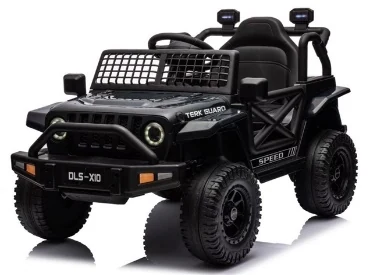
The single most expensive myth in ride-on sourcing is that a model list is just SKU names and FOB numbers. Buyers who build their list that way discover the gap at the container, not at the quote: the variant code does not match the PO, the file does not cover the lot, and nobody can prove which piece was approved. A usable Electric Cars & SUVs model list is a worksheet with fixed columns, a blank-cell rule, and a tag on every cell that says whether it is a supplier claim or something you observed. Build it before you negotiate, and every ride on toys bulk order you place becomes a comparison instead of a gamble.
Key takeaways for importers building a ride-on model list
- Fix the schema before you collect data: SKU, product type, configuration/variant code, voltage, battery, motor count, unit dimensions, carton quantity, market/quote variant, and document status. A row missing a column is not a row you can quote.
- Tag every cell as claim or observation. A quote variant such as DLS-X15A is a supplier claim until a sample, a photo set or a document confirms it; never let a claim and a verified value sit in the same untagged column.
- Leave unknown cells blank. Inferring a battery, a carton quantity or a certification from a similar SKU is how wrong specs reach production. A blank cell is a question to the supplier, not a guess.
- Match documents to market and lot. A type-test or golden-sample report does not automatically cover a later production lot — the report SKU, materials, colours and production cohort must line up with the PO.
- Set the pre-shipment photo gate before the first order, not after. Colour, fit, flash and function are compared against the sealed golden sample on the QC shelf, because an email approval is not an approval standard.
Which columns belong in an Electric Cars & SUVs model list?
The column set is what makes the list reusable across quotes, samples and production. At minimum: internal SKU, product type (for example Off-Road Vehicle), configuration or variant code, voltage, battery configuration, motor configuration, unit dimensions, carton quantity, market/quote variant, and document status. Take the anchor example: ROW-353549, Electric Off-Road SUV Ride-On, quote variant DLS-X15A, 12V, battery 12V10AH x 1, motor 550 x 4, size 141*78*75, carton quantity 1, quoted for Europe and US, factory folder DLS-X15. Those values are the supplier's supplied facts — they belong in the row, and nothing beyond them belongs there until it is confirmed.
The market/quote variant column is the one most buyers skip and most need. A SKU quoted for Europe and the US is not automatically one product; packaging text, warning language and documentation can differ by destination. Keep the variant code visible so a purchase order can be checked against it character by character rather than by product name.
Document status is a column, not a folder. Write what exists and what it covers — and if nobody has told you which file covers which market and which lot, write that as the cell value. Vague status is more dangerous than a blank, because it reads like evidence.
Model-list columns: what to record, what to check, what should stop you
| SKU and product type | Record the internal SKU and the product type exactly as quoted (for example Off-Road Vehicle). Red flag: the same name is used for two different SKUs, so nobody can tell which one was approved. |
|---|---|
| Configuration / variant code | Record the variant code (DLS-X15A in the anchor example) and require it on the PO. Red flag: the quote states a variant but the PO confirms only a model name. |
| Voltage, battery, motor | Record voltage, battery configuration and motor configuration as supplied (12V, 12V10AH x 1, 550 x 4). Red flag: a cell filled in from a similar SKU rather than from the quote. |
| Unit size and carton quantity | Record unit dimensions and carton quantity (141*78*75, carton quantity 1). Red flag: CBM planning done from a guess instead of the shipped carton. |
| Market / quote variant | Record which markets the SKU is quoted for (Europe and US in the anchor example). Red flag: one SKU treated as one product across two destinations with different paperwork. |
| Document status | Record which file exists and which market and lot it covers. Red flag: a file described as 'certificate' with no SKU, material, colour or production cohort attached. |
| Claim vs observation tag | Mark each cell as supplier claim or verified observation. Red flag: an untagged column where quotes and confirmed values are mixed. |
| Assortment role | Record whether the SKU is a hero unit or a CBM filler alongside your existing categories. Red flag: a list of twenty lookalike SKUs and no stated role for any of them. |
How do you keep quote claims from becoming production facts?
Tag first, argue later. A quote variant, a battery configuration and a motor count arrive as supplier claims; a sample teardown, a photo set against the golden sample or a document that names the SKU converts them into observations. The worksheet should show which is which, per cell, because the failure mode is silent: a claim that sat in a spreadsheet for six weeks starts to feel like a verified spec.
The same discipline applies to commercial models. OEM and ODM are production models, not safety certificates — the order has to define design ownership, tooling, IP, testing, branding and production responsibility separately. ODM normally means the supplier offers an existing or supplier-developed design that you may brand or customise, and ownership and exclusivity are separate questions you should settle in writing before the model list is frozen.
Packaging belongs in this section too. Inner-pack quantity, orientation and separators should be standardised so carton weight, protection and barcode handling stay repeatable across lots. If the inner pack changes between the sample and the bulk, the model list row is no longer describing the same product.
What does the golden-sample check actually compare?
Bulk is compared against the sealed golden sample on the QC shelf — colour, fit, flash and function — not against an email thread or a photo the buyer liked. This is the cheapest control in the process, and it is the one most often skipped when a first order is running late. Approving from a photo means the second lot is judged against nothing at all.
The model list should carry a sample status per SKU: sample requested, sample received, sample approved and sealed, or bulk compared to sealed sample. Anything short of the fourth state is a pending risk, not a completed step. That status is also what lets a third party — your agent, your inspector, your freight forwarder — understand which rows are safe to build on.
How do you match documents to the right market and lot?
A file counts as paperwork only when it maps to a market and a lot. Ask which document covers which destination and which production cohort, then check the SKU, materials, colours and production date against the PO. A type-test or golden-sample report does not automatically cover a later production lot, so a report with the right product family and the wrong cohort is still a gap.
Different papers do different jobs. A UKCA mark and a VOC file are not interchangeable, and a buyer who tries to use one document for both ends up re-testing under time pressure. Where restricted substances are in scope, the test should cover the accessible plasticised components and the current restricted list for the target market — for example, the RoHS restricted-substance list includes DEHP, BBP, DBP and DIBP for in-scope electrical and electronic equipment.
For US and EU destinations, add a column for which market the file supports and leave it blank when no file is supplied. Never write a certification you have not seen, and never carry a certificate number you cannot trace to a document.
Where does a button-cell compartment fit in the checklist?
Button-cell compartments are a closure and warning problem before they are a toy-function problem. For any SKU with a button-cell compartment, check the screw closure, whether a tool is required to open it, and the warning applied — before anyone discusses drive time or speed. A compartment that opens with fingernails does not ship, regardless of how good the rest of the unit looks.
Put this as its own gate in the model list rather than a note under a general safety heading. It applies to remote controls and to any accessory that travels in the carton, which is exactly the kind of item that gets added late and never re-checked.
How do you use the list to build an assortment, not just a catalog?
A model list earns its keep when it answers a container question. Mixed-container importers need high-turnover filler to complete CBM alongside their main categories — outdoor goods in one case, ride-ons in another — and generic unbranded filler makes the retail story harder to tell. Write the assortment role into each row so the list can be sorted by role, not only by price.
Curation beats dilution. A short, defensible mix with a clear reason for each SKU outperforms a long list pulled from a catalogue of thousands, because every extra row adds a document, a sample and a QC step. If two rows serve the same role at the same destination, one of them is filler for your spreadsheet rather than your container.
Keep the list live. The catalog referenced here spans twelve ride-on SKUs including ROW-353549, ROW-353516, ROW-353547, ROW-353602, ROW-353575, ROW-353570, ROW-353561, ROW-353559, ROW-353554, ROW-353553, ROW-353545 and ROW-353597 — treat that as the working set, then narrow by destination, variant and document status rather than trying to quote all of them at once.
Which B2B terms belong on every row?
FOB, MOQ, OEM status and certificates per item are row-level fields, not a header note. If one SKU is quoted FOB with a per-item certificate and another is not, that difference changes margin and lead time, and it disappears the moment the terms live in a footnote.
The catalog records an MOQ of 30 on the ride-on SKUs referenced here, which tells you the entry point for a trial order — it does not tell you the price at other volumes, the lead time, or whether the MOQ changes with branding. Those are questions for the supplier, and the answer belongs in its own column so you can compare rows instead of remembering conversations.
Treat supplier reach as a risk input rather than a marketing line. A supplier with long-standing clients across multiple continents is a different risk profile from one with a single-market book, but record it as a field you verified, not as a phrase you repeat.
Worked example (illustrative, not a real shipment)
A buyer is quoting two ride-on SKUs for a 20GP to two destinations: the US and a European market. The list has one row per SKU per destination, because the quote variant and the document status differ even when the unit does not. Around 300 units are being planned across the two rows to complete the container alongside existing outdoor goods, with the ride-ons acting as higher-ticket anchors rather than CBM filler.
The US row stalls at the document column: the file on hand names the product family but not the production cohort, so the buyer holds the row as a claim and requests the file that matches SKU, materials, colours and lot. The European row stalls at packaging: the inner-pack orientation in the sample does not match the bulk photo, so carton weight and protection cannot be confirmed and the row is flagged before deposit. Neither stall is a defect — both are cells that were never verified, caught while the sample is still the reference point.
The missing step is the one that would have stopped the shipment: no sealed golden sample comparison before the first booking. With the sample on the QC shelf and the document-to-lot mapping written into the row, both stalls surface during quoting instead of at the port.
What to ask suppliers before you freeze the model list
What is the exact configuration or variant code, and will it appear on the PO exactly as quoted?
Which file covers which market and which production lot, and can you name the SKU, materials, colours and production cohort it applies to?
Can you provide the sealed golden sample for this SKU, and will bulk be compared against that physical piece rather than a photo?
For any SKU with a button-cell compartment: what is the closure type, is a tool required to open it, and what warning is applied?
What are the FOB terms, MOQ and OEM conditions for this SKU, and are certificates issued per item?
What is the carton quantity and the packed unit dimension, and how many units complete a 20GP or 40HQ?
Will QC photos be provided before shipment, and at which production stage are they taken?
Which markets is this SKU currently quoted for, and is that a quote or confirmed order history?
If the inner-pack quantity or orientation changes between sample and bulk, how will you notify us before the carton is sealed?
Sources
Related Products & Categories
Request a Quote
Send us the model list you have built — SKU, variant code, destination and the cells you could not fill — and we will quote against those rows rather than a product name. If your list is still a draft, start with the Electric Cars & SUVs collection and add the Drift, Go-Kart & Racing Rides range when your assortment needs a second role.